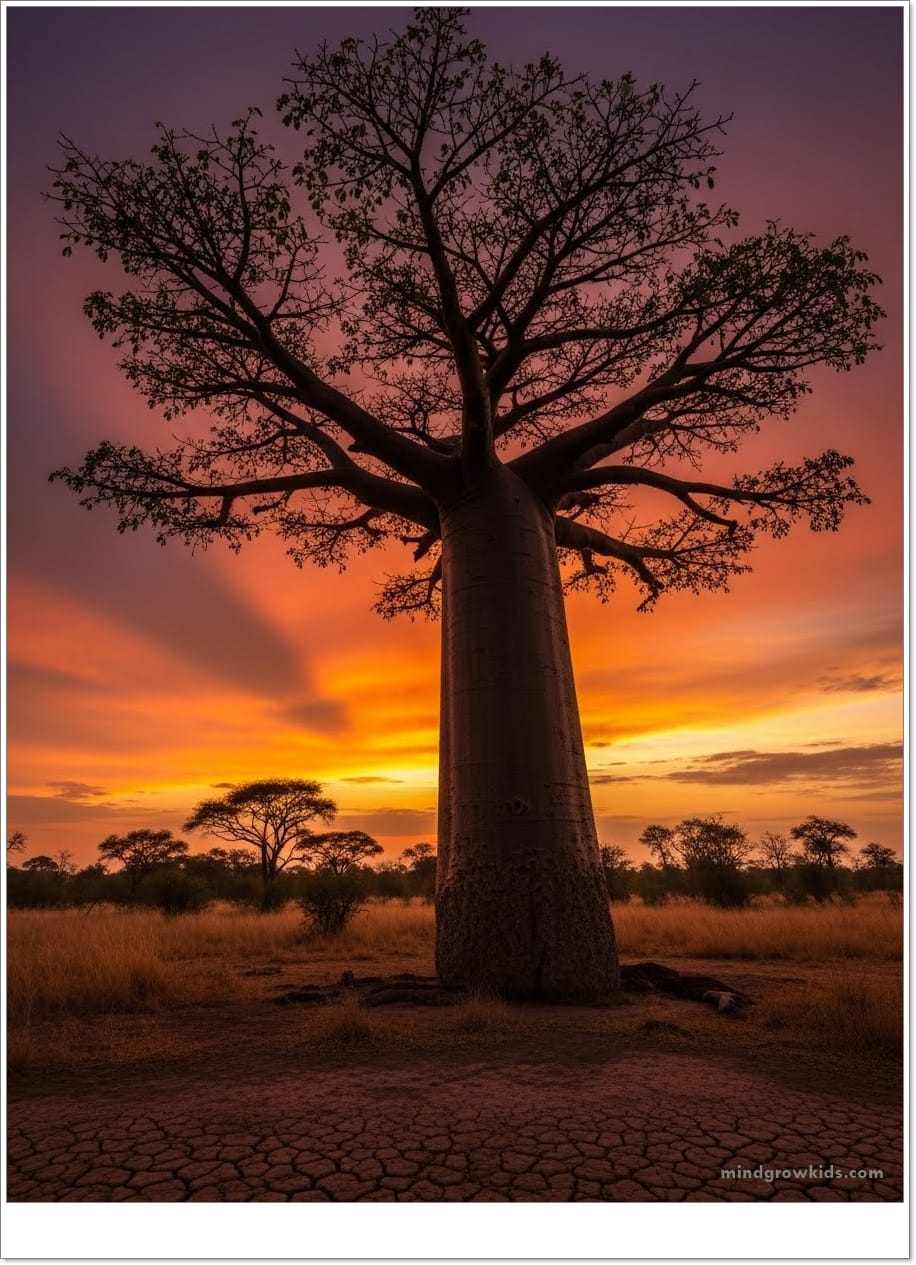
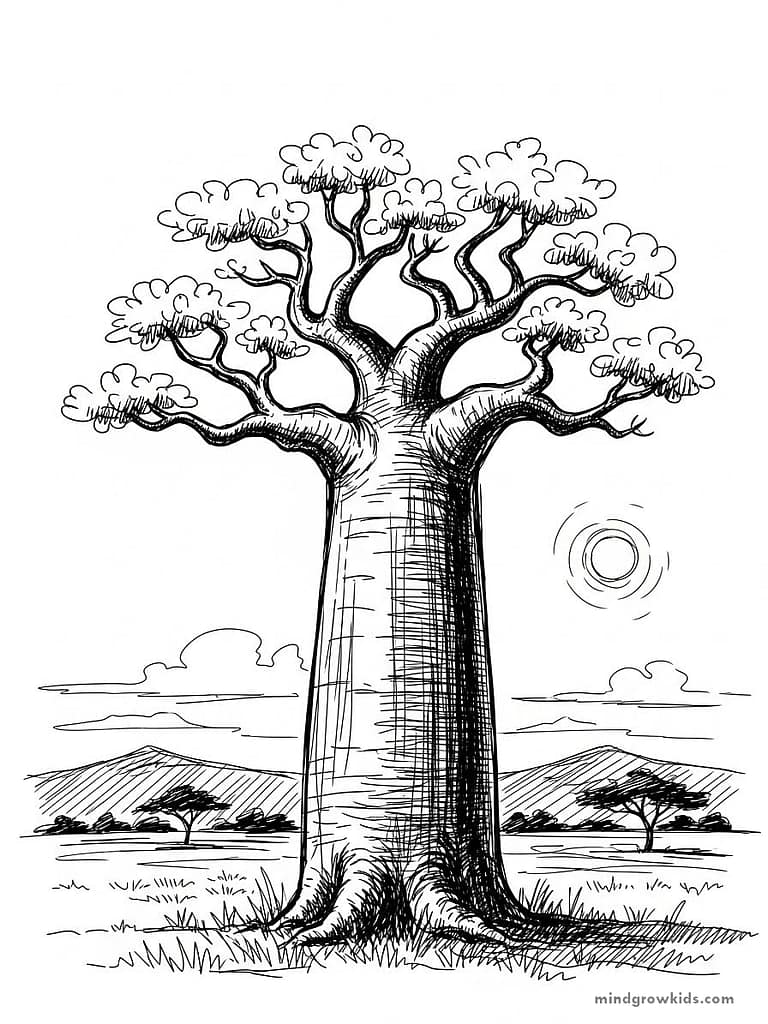
The huge trees you see here are called “baobabs”! Would you like to learn more about baobabs, which also have names like “monkey bread tree”, “bottle tree”, “upside-down tree” and “elephant tree”?
The baobab tree is found in the hot and arid regions of southern Africa. The most striking feature of this tree at first glance is its interestingly shaped branches! These branches resemble roots, making the baobab look like an upside-down tree. However, the roots of the baobab, like other trees, are underground. The baobab tree is approximately 25 meters tall. The circumference of its trunk can reach up to 30 meters. The trunk of the baobab is like a soft sponge. Thanks to this feature, it retains a lot of water. Animals can quench their thirst by chewing on pieces that break off from the trunk. Also because of this feature, it doesn’t easily burn. The baobab tree is a long-lived tree that provides food, water, and shelter to humans and animals. For example, Africans hollow out the trunks of baobabs and use them as water reservoirs. Many animals, such as parrots, squirrels, snakes, and eagles, also make nests by carving holes in the tree trunks.
Baobab leaves remain leafy only during the summer months. Their leaves are rich in vitamin C, sugar, and calcium. Therefore, baobab leaves are an important food source for both animals and humans. Africans cook these nutritious leaves to make meals.
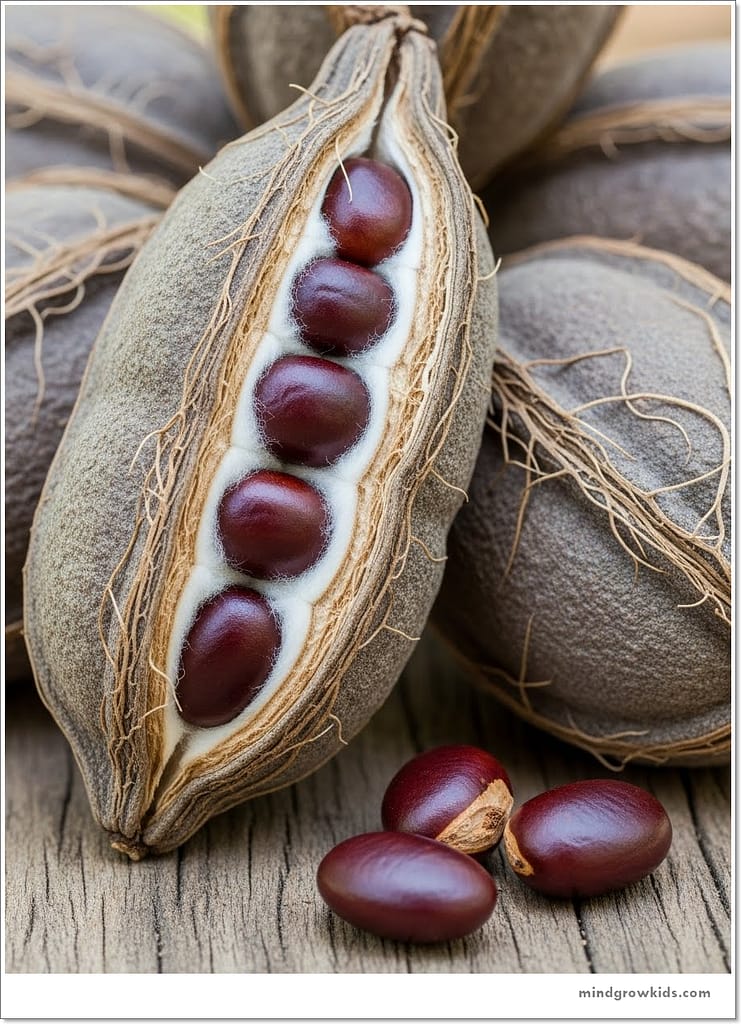
The word baobab comes from Arabic and means “fruit with many seeds.” Baobabs have large fruits, 10-20 centimeters long, containing numerous seeds. The pear- or egg-shaped fruits are very sweet. The outside of the fruit is covered with a light brown, hairy, hard rind. The inside has a sticky consistency.
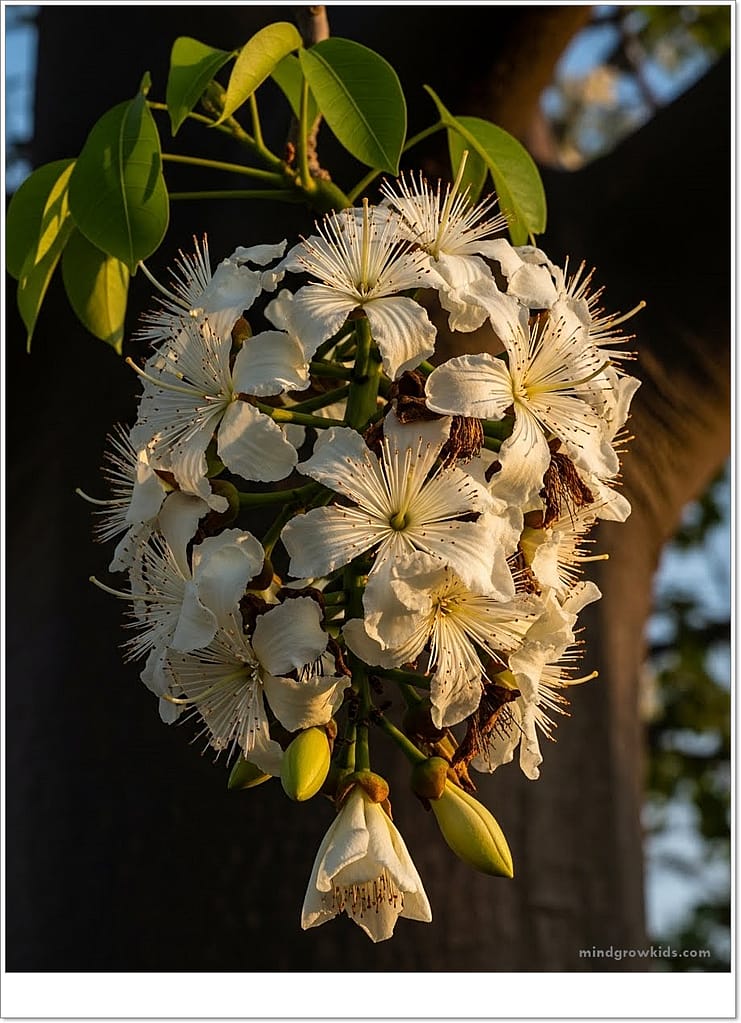
Baobabs bloom with large, pure white flowers between October and December. The fragrant flowers, which open in the evening, wilt within 24 hours. However, fruit bats, insects, and some birds, which are active at night, ensure pollination during this short period. This allows the flowers to develop into fruit, ensuring the tree remains fruitless for three months.
The fruits contain hard, black seeds. The seeds are covered with a white, powdery substance. Africans make a lemonade-like drink by soaking this substance in water for a while. Many animals, such as monkeys and baboons, love the taste of this powdery substance.