
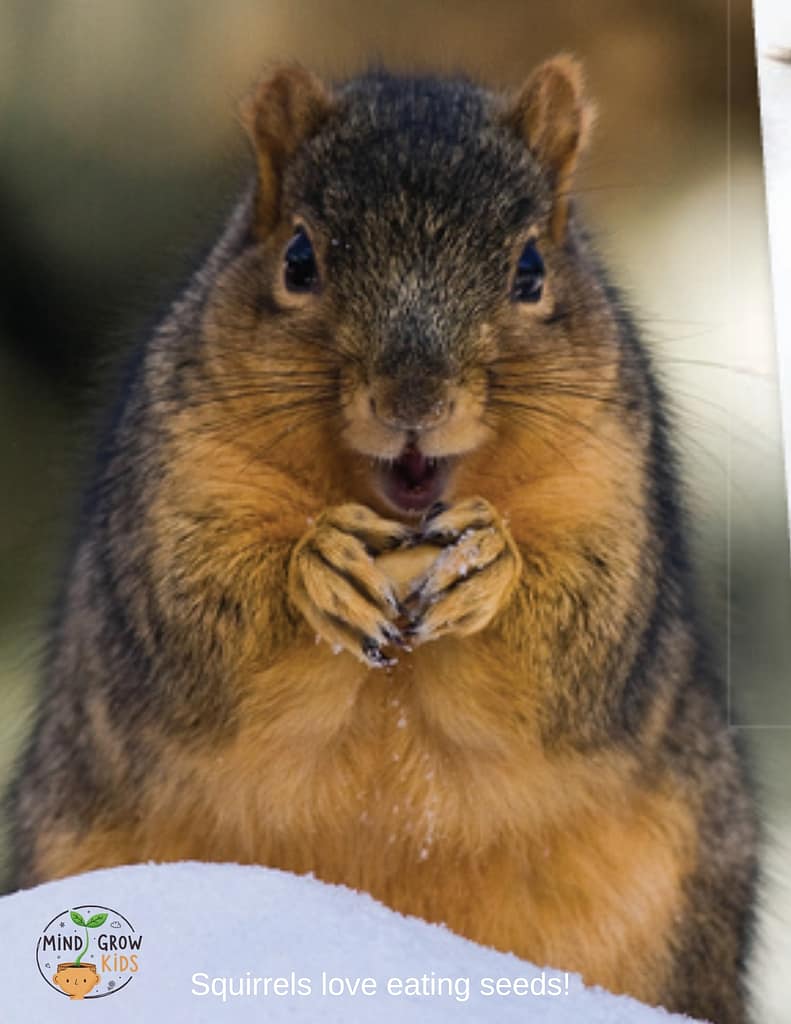
If you go for a walk in a snow-covered forest this season, you can encounter many animals. There are flocks of birds, silent deer, curious squirrels, and mice. If you’re lucky, you might even see the footprints of wild cats, pigs, foxes, weasels, wolves, and even grizzly bears in the snow. However, life in the forest in winter is quite difficult for animals. Almost all the plants have shed their leaves, and many are covered in snow. Finding food under these conditions is not easy at all. Nevertheless, there is still something to eat for animals in the forest.
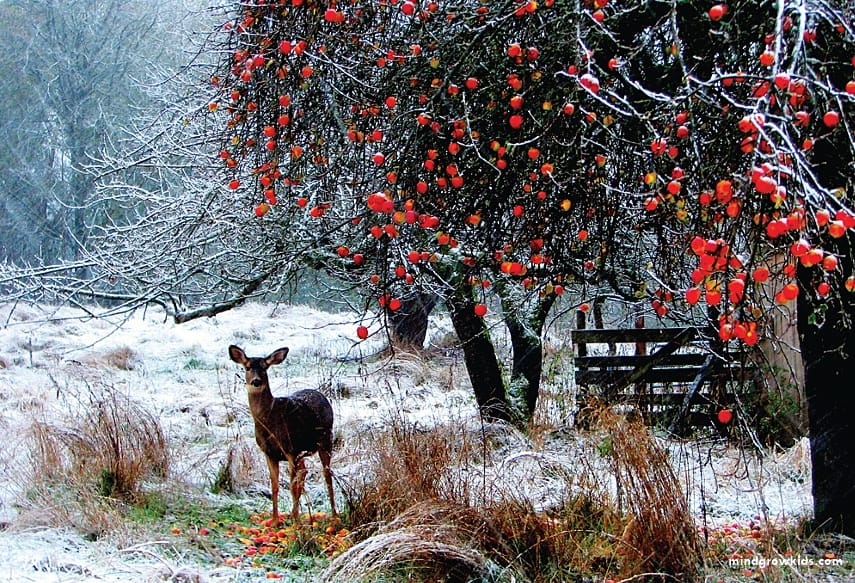
Deer are one of the quietest animals in the forest. Their sense of smell is highly developed, allowing them to hide from predators like wolves. Their sense of smell is useful not only for hiding but also for finding food. They can easily detect the scent of moss, fresh grass, and mushrooms under their bellies. Deer also feed on mistletoe, lichen, and moss on tree trunks. They also eat plenty of fruit.
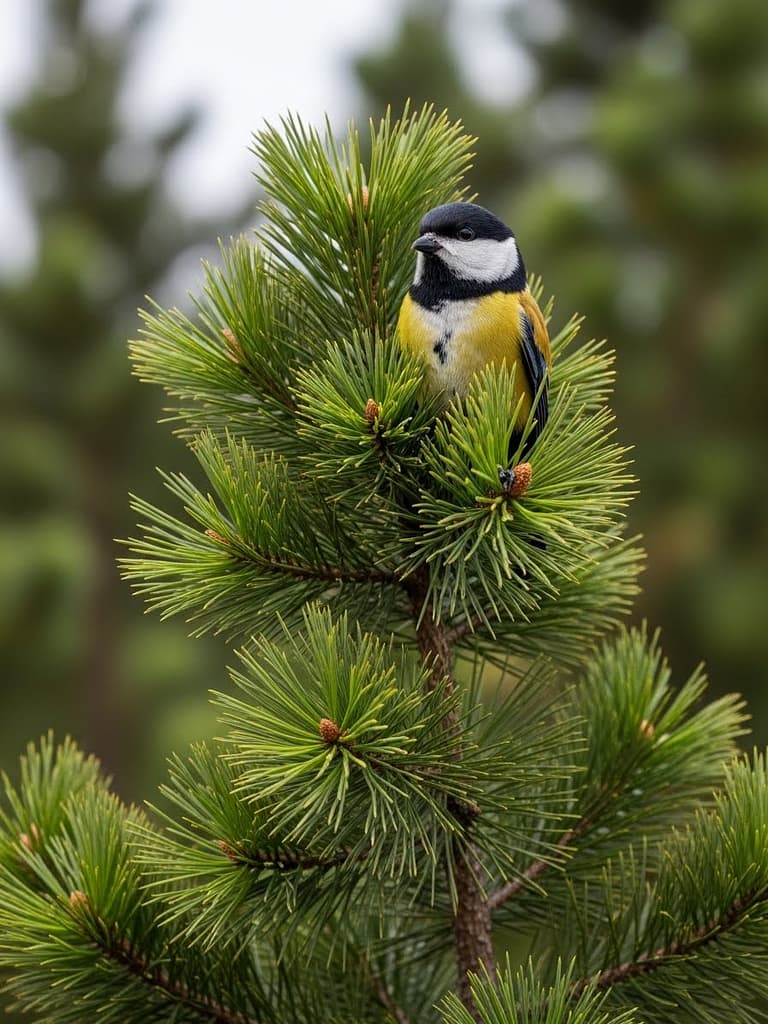
The seeds inside pine cones, which contain plenty of oil, are an indispensable food source for birds. By feeding on these seeds, birds store fat in their bodies, thus protecting themselves more easily from the cold. Some plants retain their fruits and seeds even in winter. Animals that feed on these fruits and seeds do not stray far from the vicinity of these plants. If you wait quietly in the forest where these plants are found, you can see these animals. If you stand silently under the trees for a while, you can hear the sounds of flocks of grebes or finches. Blue grebes, great grebes, pine grebes, beech grebes, or small finches and blackfinches will greet you with their cheerful calls.
These birds travel in flocks, eating pine cone seeds and insects sleeping on the tree trunks. If they are very hungry, they won’t even notice your presence! In such a case, you can witness up close how the crossbills open the pine cones with their beaks.
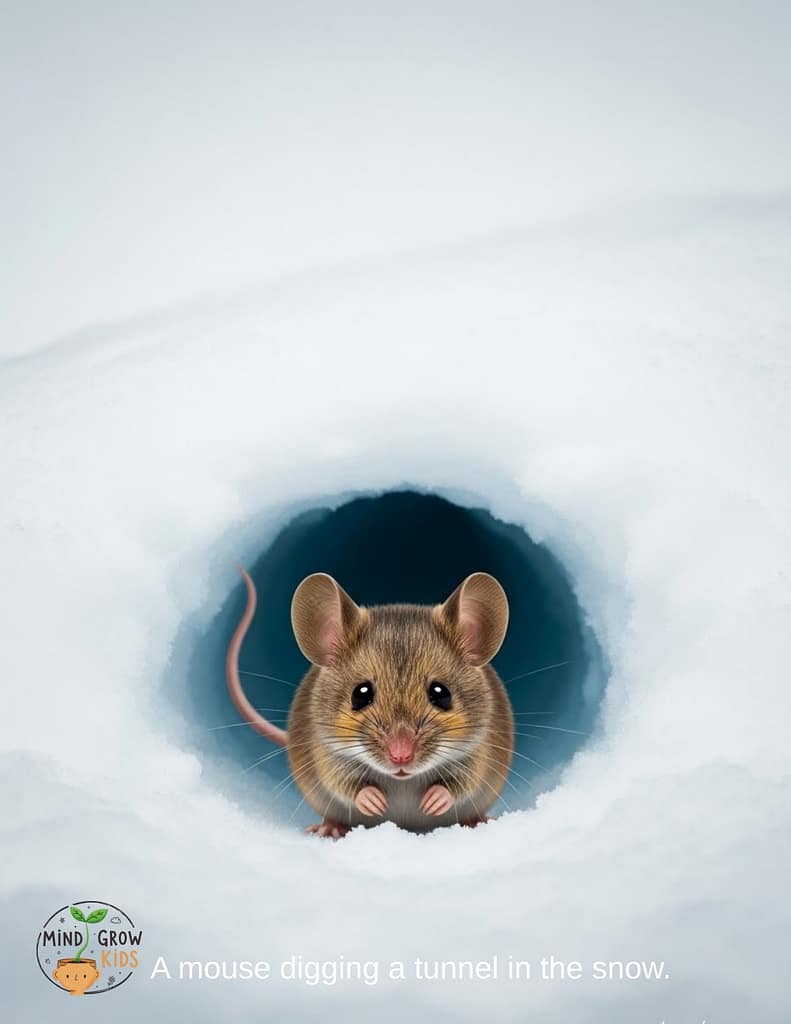
In open areas within the forest, you might hear rustling sounds from under the snow. These sounds could be coming from mice scurrying through tunnels they’ve dug under the snow. They’re either eating seeds they’ve collected or scurrying around looking for new ones. Foxes, weasels, and owls also listen attentively to mouse sounds. Once they pinpoint the source of the sounds, they immediately catch the mouse.