


Eating behavior is a complex behavior with biological and social components. The incidence of eating problems in childhood is increasing day by day. This problem is seen in 25-45% of healthy children, while it can reach up to 80% in children with developmental delays.
Studies conducted on healthy children without any eating problems indicate that 20-60% of these children’s parents believe that their children do not eat enough. Serious eating disorders requiring intensive medical and behavioral treatment are seen in 3-10% of children. When evaluating childhood eating disorders, attention must be paid to physiological/functional and behavioral problems and the interaction between them. Attributing eating disorders entirely to structural or psychological processes can lead to the neglect of most behavioral problems. Conversely, viewing all eating problems as behavior-based can lead to overlooking organic causes. Successful treatment outcomes require the joint assessment of physiological causes and behavioral problems.
For example, in a child with normal eating behavior, the problem may begin with an accidental choking incident/experience, which causes anxiety in the child and leads to food avoidance behavior. It would be appropriate to address this case as a choking phobia.
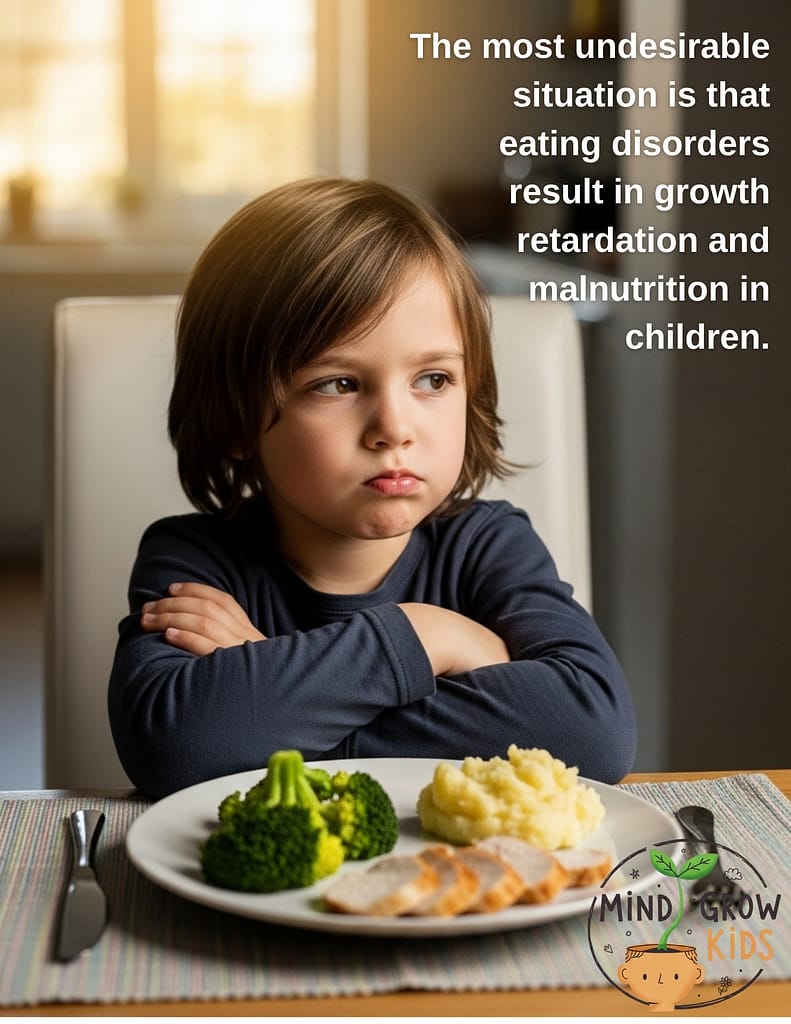
The most undesirable outcome of eating disorders in children is stunted growth and malnutrition. The most common reasons children with eating disorders seek medical attention are selective eating and eating too little. Picky eating behavior is the refusal of certain food groups and reluctance to try new foods. In addition to children with medical and developmental disorders, children with normal development may also exhibit picky eating behavior. It has been reported that picky eating in early childhood may be associated with eating disorders in adolescence and early adulthood.

Picky eating is common among children. A study conducted in the US reported that the rate of children exhibiting selective eating behavior was 19% around the fourth month, while it was over 50% between 19 and 24 months. A study conducted in the UK showed that 20% of 455 children with an average age of 30 months had eating problems, and parents described 42% of these children as picky eaters and 39% as under-eaters. Most children prefer to drink liquids rather than eat food. A child who consumes excessive amounts of liquid foods such as milk and fruit juice will have a reduced appetite. Parents think that their picky eaters eat very little and do not eat healthily. Picky eating also causes anxiety in parents and caregivers.
Studies showing the weight status of children with selective eating in later periods are limited, but these children eat less, eat slowly, and have little interest in food. Children reported by their families to have eating problems are reported to be shorter, thinner, and grow more slowly. However, one study indicated that 11% of children with eating problems had a body weight value below the fifth percentile at age two.
Detection of Organic Disease In children with eating disorders, it should first be investigated whether the underlying cause of the loss of appetite is organic. This requires taking a thorough history and performing a physical examination. In necessary cases, certain laboratory tests (such as complete blood count, urine analysis, and parasite screening) may be performed. Pediatric eating disorders are often accompanied by organic disorders. Eating disorders are more common in certain situations. Serious eating problems can develop in 40-70% of premature infants. Eating disorders are more common in children who need tube feeding and in children with gastrointestinal problems such as abdominal pain, gastroesophageal reflux, and vomiting. Discomfort and decreased appetite due to digestive problems can lead to avoidance of food. For example, a child with gastroesophageal reflux disease may experience pain or discomfort related to esophagitis during or after eating.

Cancer drugs, which often cause nausea and vomiting, can cause eating problems in children who previously had normal eating behavior. Down syndrome, craniofacial anomalies, and cystic fibrosis are conditions highly associated with eating disorders. Structural problems contribute to the development of eating disorders. Any structural anatomical abnormality involving chewing, swallowing, and digestion disrupts the process and can cause serious problems. Oral cavity abnormalities such as cleft lip and palate, macroglossia, ankyloglossia, and dental caries increase eating problems. Pharyngeal or esophageal strictures or anomalies cause difficulty swallowing. Neuromuscular disorders such as cerebral palsy and paralysis can cause serious eating disorders. Similarly, conditions that affect chewing and swallowing coordination, such as brain stem glioma and Chiari malformation, are other important causes of some eating disorders. Eating problems are more common in children with autism than in children with normal development. Many studies report that food refusal and restricted food intake are more common in children with autism. Children with autism often have different eating habits due to the nature of the disorder. The strict adherence to rituals and routines, which is a key feature of autism, may explain this. Sensory integration problems and hypersensitivity may cause selective eating behavior in children with autism. In addition, parents of children with autism report gastrointestinal symptoms more frequently, even though no organic cause has been identified.
The presence of certain symptoms and conditions should alert the clinician to the possibility of underlying organic pathology. These symptoms and clinical conditions include dysphagia, odynophagia, uncoordinated swallowing function, cessation of feeding with crying, vomiting or diarrhea, eczema, growth retardation, prematurity, congenital anomalies, and developmental anomalies including autism. Dysphagia and odynophagia suggest gastroesophageal reflux, eosinophilic esophagitis, or esophagitis due to infection or toxic injury. In children with chronic cough and recurrent pneumonia, or neurological disorders such as cerebral palsy, uncoordinated swallowing function should be considered. If an infant willingly takes fluids but then recoils with pain and crying after a few sips and stops eating, this suggests upper gastrointestinal system pathologies. In addition, weight loss and the presence of aphthous ulceration should prompt investigation of celiac disease by inquiring about family history. It should be remembered that the absence of physical signs in a child with eating problems does not always rule out a physical cause. In addition to a basic physical examination, invasive procedures may be necessary in some cases to identify the underlying medical cause of the eating disorder.

Tests that allow observation of swallowing function, such as videofluoroscopic swallowing studies, help identify problems in the digestive tract. Assessment of growth helps to understand the degree and severity of anorexia in children. However, it should be noted that eating disorders can also occur in children with normal growth. In a child with growth retardation detected by anthropometric measurements, if there is no history of congenital anomaly, intrauterine growth retardation, or prematurity, constitutional factors, or a family history of growth retardation, eating should be given special attention in the clinical evaluation. A detailed three-day eating history should be obtained; how foods are prepared, how they are given, the amount, who gives them, and methods used during eating, such as television, distraction, rewards, and punishment, should be learned. In this assessment, certain family factors such as parental education, social status, and family income should also be taken into account. In most children with eating problems, no organic cause can be identified. In children with underlying organic disease, the existing disease should be treated first. In the group where the eating problem does not disappear with treatment and there is no underlying organic pathology, the focus should be on eating habits.
Clinical Interview:
The clinical interview provides an opportunity to obtain information about the child’s current eating problem and eating history, as well as psychosocial and developmental factors. It provides an important perspective on the onset and development of the eating problem. A better understanding of eating problems requires an understanding of normal eating development. The eating process involves sequential steps such as putting food in the mouth, chewing, pushing it back, and swallowing. Eating problems can occur at any point during this process. A problem that arises in the early stages of development can be fundamental to eating disorders. For example, the transition from breast milk to solid foods requires rapid developmental adaptation, and eating-related problems may arise during this period. Sometimes, despite the normal progression of these developmental stages, parental attitudes and certain cultural beliefs may be the cause of problems.
The clinical interview should not focus solely on the current problem. It is important to learn about the development of the eating problem over time. The physician should try to identify any events that trigger the eating problem, such as aspiration or abdominal pain, or factors that exacerbate the existing problem, such as force-feeding. In addition to assessing the child’s eating situation, a psychosocial and developmental assessment of the child should be performed. It is important for the physician to be aware of the child’s mental health, mood problems, and anxiety level in order to understand the cause of the eating problem and to solve the problem. Issues such as the child-caregiver relationship, the caregiver’s stress, and psychosocial status should also be evaluated. Sometimes eating disorders can develop in line with the caregiver’s expectations regarding eating. These expectations, which are influenced by personal and cultural factors, can affect the child’s eating behavior. The topics that should be evaluated in the clinical interview are summarized below.
Topics to be discussed during the clinical interview with the caregiver:
1- Food intake history;
- Current eating status (including calories, variety, and consistency),
- Preferred and disliked foods,
- Meal frequency, eating between meals,
- Appetite,
- Eating history, onset of any changes in eating,
2- Medical history;
- Current weight status and weight curve,
- History including illness, surgery, hospitalizations,
- Medical tests performed to assess eating problems and their consequences,
- History of painful swallowing, abdominal pain, painful defecation,
- Medications used,
3- Developmental history;
- Timing of developmental milestones,
- Developmental delays or deficiencies,
- Development of eating, whether normal oral eating has been interrupted,
4- Behavioral and emotional history;
- Presence of behavioral and emotional problems such as opposition and anxiety,
- Psychiatric evaluation and diagnosis,
- Psychiatric treatment history,
- Psychiatric medication use,
5- Family history and circumstances,
• Family history involving eating problems,
• Presence of psychopathology or stress in the caregiver,
• Current or past familial stress factors,
• Caregiver’s expectations regarding eating, including cultural beliefs about eating and weight,
6- Behaviors during meals;
• Duration of meals,
• Behavioral problems including tantrums or defiant behavior during meals,
• Excessive chewing or excessive fluid intake during meals,
• Fear of swallowing, choking, gagging, vomiting,
• Differences in eating at home and outside the home,
• Role of parents in eating,
• Parents’ methods for managing eating problems,
7- History of trauma related to eating;
- History of aspiration, gagging, vomiting,
History of force-feeding,
History of trauma to the face or mouth involving oral or facial surgery, - Witnessing trauma related to eating (e.g., witnessing aspiration of a family member),
Time of trauma,
8- Eating environment;
- Location of eating,
- Noise and movement in the eating environment,
- Presence of conflict in the eating environment.
Observational Assessment Information obtained from parents during clinical assessment is important, but this information may not always reflect reality. Therefore, observational methods can be used to assess the child’s eating behavior. In this method, a simulated meal is arranged with the participation of the child and caregiver. During the simulated meal, foods that the child prefers and dislikes are offered to observe the child’s responses. Thus, both the child’s behaviors, such as accepting or rejecting food, communicating preferences, and showing signs of stress, and the caregiver’s behaviors, such as presenting food, responding to food rejection, and providing feedback on appropriate and inappropriate behaviors, are observed, and goals for a behavioral approach can be set accordingly.
Assessment Scales Assessment scales can assist in determining the severity of eating difficulties based on information obtained from clinical interviews and evaluations. The “Child Feeding Behavior Scale” and the “Pediatric Feeding Behavior Assessment Scale” have been proven to be appropriate psychometric tools and have been highlighted as useful in clinical practice.
The “Child Feeding Behavior Scale” is a parent-reported questionnaire developed by Archer et al. in 1991. It assesses the parent-child relationship and childhood eating It has been developed to understand their problems. This questionnaire contains 40 items, divided into two groups: those related to the child and those related to the parents/family system. The section related to the child consists of 28 items. This section aims to assess children’s food preferences, motor skills, and behavioral adaptation, while the 12-item section related to parents aims to assess parents’ behavioral approaches, their feelings and thoughts about their child’s eating, and interactions among family members.
Each item’s answer is based on a 5-point response system indicating the frequency of the behavior. Again, for each item, the question “Is this a problem for you?” was asked and a yes/no answer was requested. Reliability tests have shown that this scale is a reliable scale. Another scale is the “Child Eating Behavior Questionnaire” developed by van Strien T and Oosterveld in 2001. It is a 35-item questionnaire answered by parents. Each item is rated on a 5-point scale. The items in the questionnaire were developed based on previous literature on eating styles and data obtained from interviews with parents. This questionnaire aims to determine the child’s appetite on eight subscales, which are: food craving, emotional overeating, enjoyment of food, drinking craving, satiety craving, slow eating, emotional undereating, and food selectivity. The 2008 adaptation of the “Dutch Eating Behavior Questionnaire” developed by Stark et al. in 1986 for children aged 7-12 has become widespread. The original questionnaire developed in 1986 is suitable for adults and adolescents. This questionnaire is a 5-point Likert-type questionnaire consisting of 33 items. Thirteen of these items are about emotional eating, 10 are about external eating, and 10 are about measured eating. In the adapted version, 6 of the 10 questions from the original questionnaire were retained and adapted to be understandable for the younger age group. Children aged 7-12 answered the questions in the questionnaire themselves. Taking into account the short attention span of children in this age group, the adapted questionnaire consists of 20 items; 8 items on emotional eating, 7 items on external eating, and 5 items on measured eating.
Food Diaries Another tool for assessing pediatric eating problems is food diaries. Parents For example, parents are asked to observe and record their children’s intake of solid and liquid foods over a specific period, such as one week; this information is obtained at the beginning of treatment. Food diaries can record a wide variety of information, such as the amount and type of food and drink consumed, times of intake, behaviors during eating, duration of the meal, and the environmental setting at the time of consumption (presence of other family members, location of the meal). These records are helpful in evaluating eating patterns and the nutritional value of consumed foods. Treatment Studies on the treatment of pediatric eating disorders have led to two common conclusions.
The first is that behavioral techniques are effective in treating eating disorders. The second is that a multidisciplinary approach is necessary to achieve the best treatment outcomes in severe and complex cases. Regulating Appetite The first step in successful behavioral treatment of eating disorders is regulating appetite. To do this, the child must be motivated to eat. Therefore, the child’s appetite must be controlled so that hunger is stimulated at mealtimes. Regulating appetite requires restricting the child’s calorie intake between meals. For children who need tube feeding, the calories from tube feeding should be restricted. This is because such feeding can reduce appetite and decrease the desire to eat food orally. To create hunger at mealtimes, in addition to restricting food intake between meals, appetite-stimulating drugs may be used in some cases. However, such drugs have generally been tested in cancer cachexia, and there are no studies on their use in children without other problems. Therefore, it is not appropriate to use drugs as a first step in all children with poor appetite. These agents can only be tried in severe cases. Although cyproheptadine hydrochloride is an antihistamine, its secondary effect is to stimulate appetite. It has been reported that its use for up to nine months to stimulate appetite in cystic fibrosis patients is safe in terms of side effects. The mechanism of action is unknown. Megestrol acetate has persistent hyperinsulinemi Its use in children with hypoglycemia has been reported to improve the child’s appetite. Side effects of megestrol acetate include the development of diabetes, glucosuria, insomnia, hyperactivity, restlessness, decreased serum cholesterol, testicular insufficiency, and adrenal insufficiency. Studies conducted on animals with brain tumors have found evidence that omega-3 fatty acids may have an appetite-stimulating effect through the central nervous system. It has been reported that prokinetic agents such as trimebutin may be beneficial in children with poor appetite who have delayed gastric emptying, as shown by scintigraphy. In programs aimed at regulating appetite, close monitoring by a physician is necessary, and weight and calorie intake charts should be checked frequently.
The importance of water consumption should be emphasized to maintain adequate hydration levels. Behavioral Modifications After the child’s appetite has been regulated to encourage eating at mealtimes, various behavioral modification techniques can be applied. Essentially, when shaping the child’s eating behavior, it is appropriate to give positive feedback when the child exhibits appropriate behavior and to apply the withdrawal method for inappropriate behaviors. In this method, for example, when the child eats the desired food, the caregiver gives feedback in the form of praise. Conversely, when the child exhibits inappropriate behavior, such as throwing food, the caregiver ignores this behavior. These approaches can be supported by a reward system, which can make it easier for the child to perform the desired behavior. For a child with food preferences, eating a small amount of a food they do not like can be rewarded with a food they enjoy. For negative behaviors such as disruptive behaviors, mild punishments such as time-outs can be applied. Children with eating problems reinforce this behavior when they avoid food. The use of the escape-extinction technique in pediatric eating disorders has been proven. This technique involves continuous presentation until the child consumes the food. For example, after placing the food in the child’s mouth, the caregiver can hold the spoon in the child’s mouth until they consume it. Combined behavioral techniques have been studied in relation to eating disorders and have been found to support treatment.
Multidisciplinary Approach
The successful treatment of pediatric eating disorders requires a multidisciplinary approach. In addition to physicians and psychologists, other important members of the team include dietitians to monitor calorie intake and set calorie goals, speech therapists to address motor and sensory issues related to eating, and social workers to provide the family with necessary resources. Furthermore, the multidisciplinary approach has been shown to be cost-effective. When the child’s weight and eating status require intensive monitoring and outpatient treatment is unsuccessful, hospitalization for observation is appropriate.
Article Sources:
- Manikam R, Perman JA. Pediatric feeding disorders. J Clin Gastroenterol 2000;30:34-46.
- Linscheid T, Budd K, Resnake L. Pediatric feeding probems. In: MC R (ed). Handbook of Pediatric Psychology. Newyork: Guilford Press; 2003. p. 523-42.
- Carruth BR, Ziegler PJ, Gordon A, Barr SI. Prevalence of picky eaters among infants and toddlers and their caregivers’ decisions about offering a new food. J Am Diet Assoc 2004;104:s57-64.
- Jacobi C, Agras WS, Bryson S, Hammer LD. Behavioral validation, precursors, and concomitants of picky eating in childhood. J Am Acad Child Adolesc Psychiatry 2003;42:76-84.
- Kerwin ME. Empirically supported treatments in pediatric psychology: severe feeding problems. J Pediatr Psychol 1999;24:193-214; discussion 5-6.
- Richard J SD. Textbook of Pediatric Psychosomatic Medicine. 1 st. edition. American Psychiatric Publishing; 2010.
- Chatoor I AM. Classifying feeding disorders of infancy and early childhood. Age and Gender Considerations in Psychiatric Diagnosis: a Research Agenda for DSM-V: American Psychiatric Publishing; 2007. p. 227-43.
- …
Source link:https://dergipark.org.tr/tr/download/article-file/902856
Author: Esra Kurt, Emel Örün
Received : 07.01.2015
Accepted :10.09.2015
Contact:
Address for Correspondence: Dr. Emel Örün,
Özel Çankaya Yaşam Hospital, Pediatric Health and Diseases Clinic, Ankara, Turkey
Tel: +90 533 520 72 98
Email: emelorun@hotmail.com