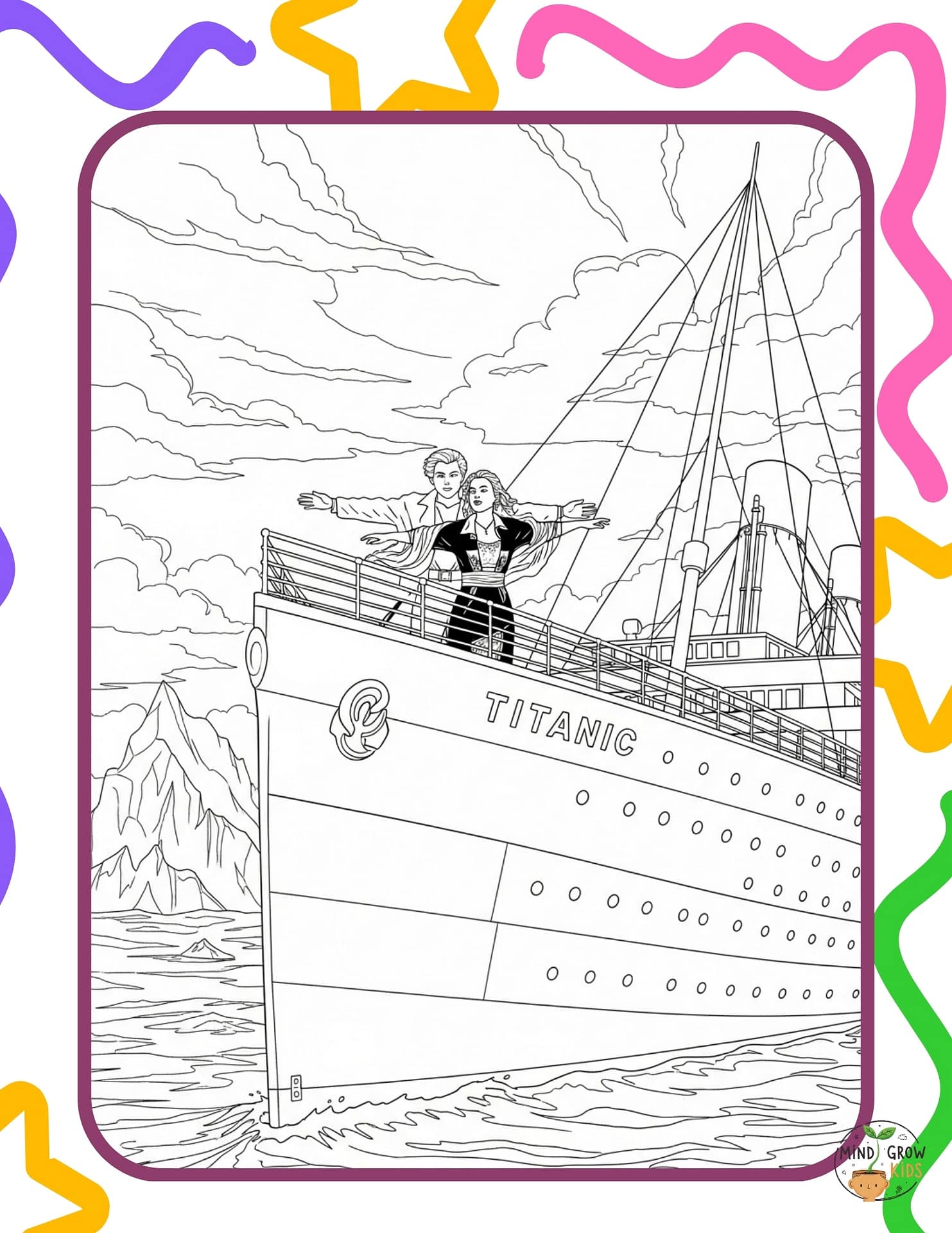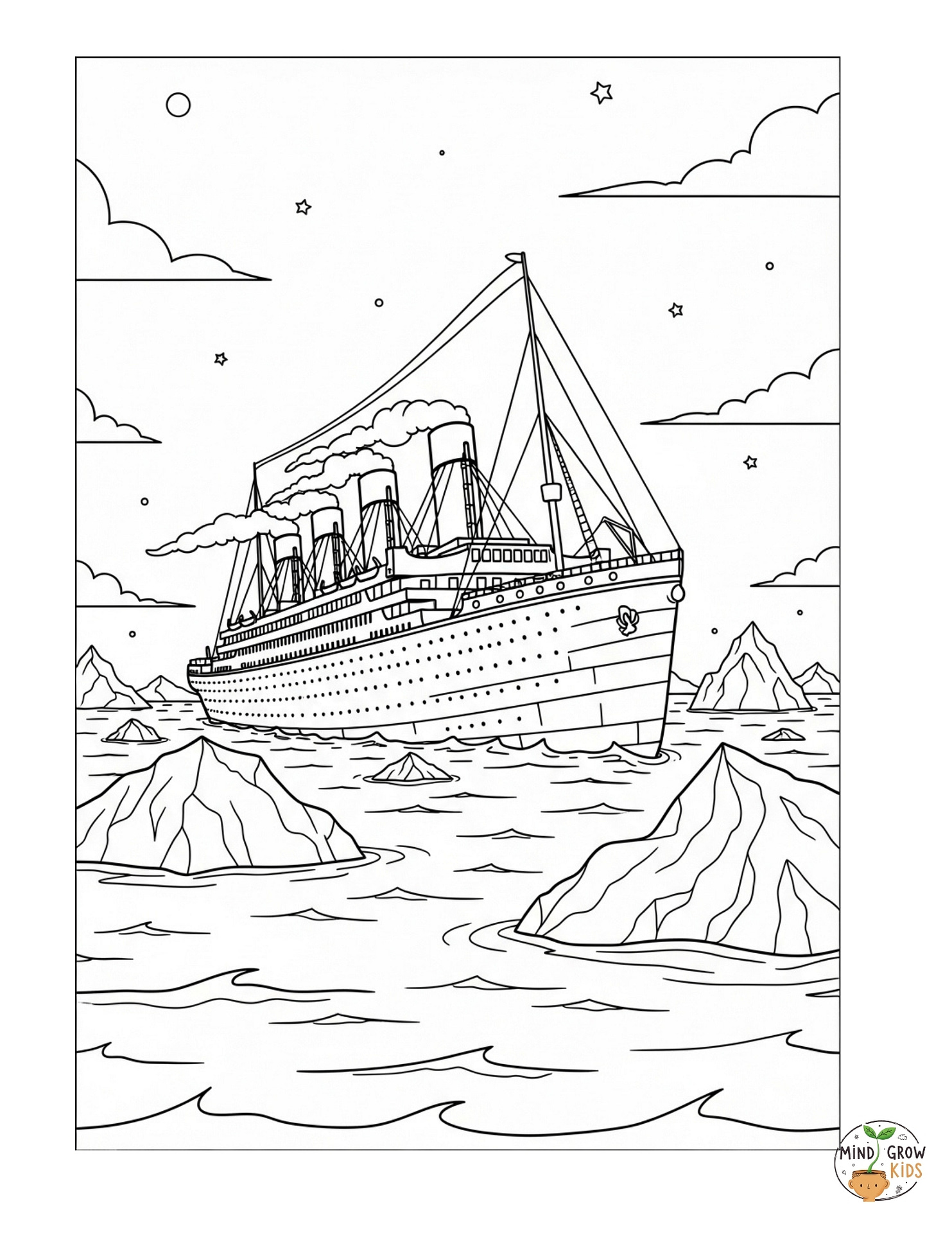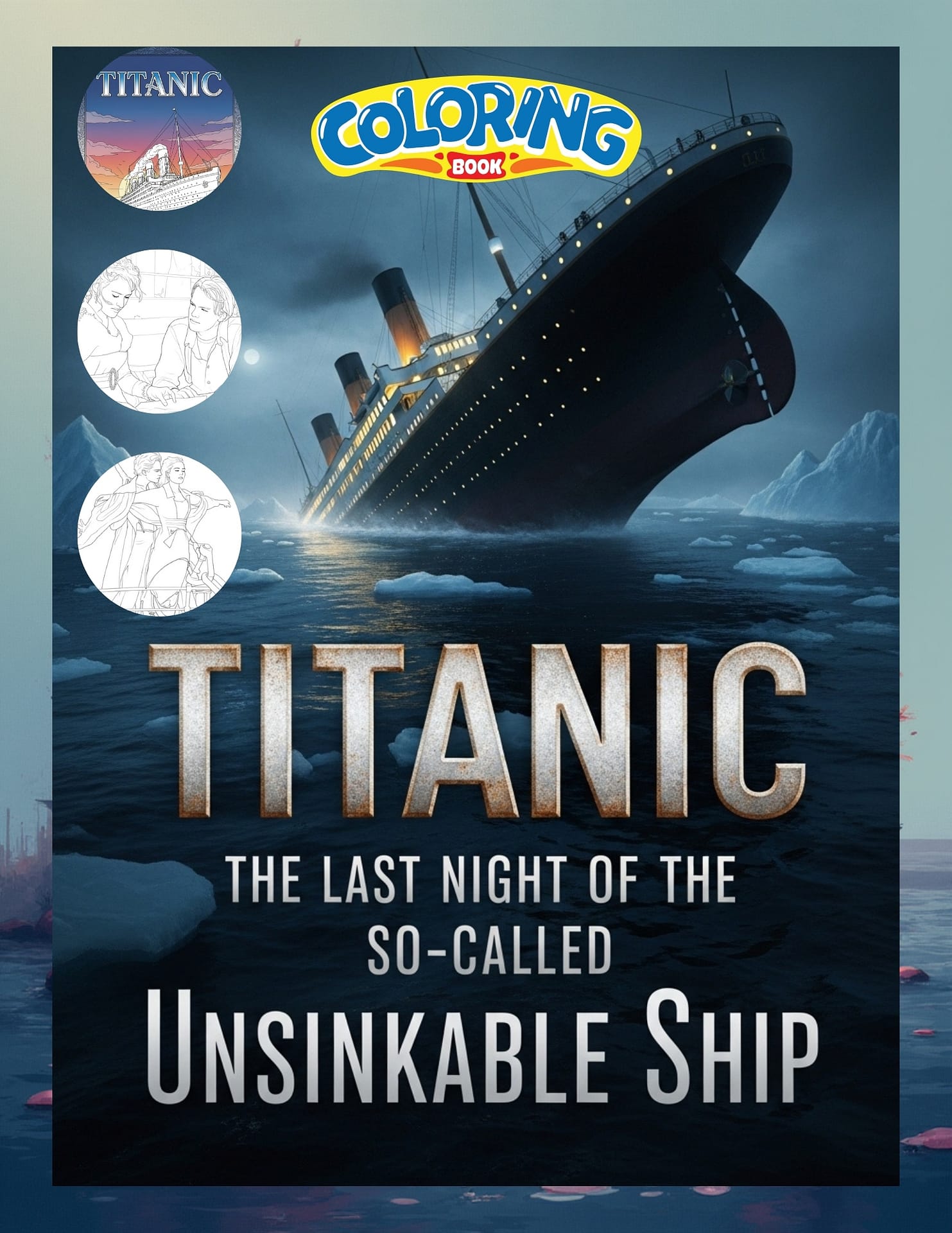
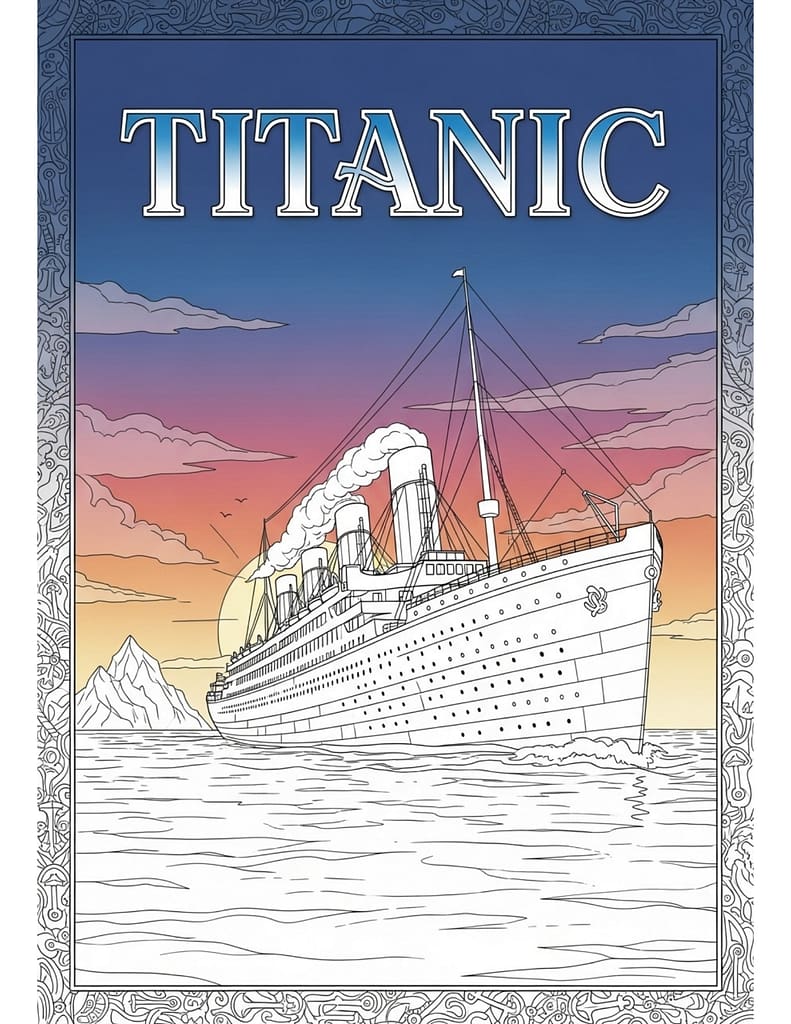

On the night of April 14, 1912, the Atlantic Ocean was unusually calm. The surface was as smooth as glass, and the sky was studded with bright stars. Lookout Frederick Floyd watched this tranquil scene from his post at the bow of the ship. Suddenly, a massive, terrifying silhouette appeared in the darkness. Ahead of them was a huge iceberg, obscuring the sky.
In a panic, he rang the ship’s bell three times and picked up the phone to the captain’s cabin. “There’s an iceberg right in front of us!” he shouted. The sixth officer who answered the phone thanked him calmly and hung up. At that moment, two hours and 40 minutes of fear and horror began for the 2,224 passengers and crew of the Titanic, which was said to be “unsinkable.”
Too Late a Maneuver
When the lookout’s warning came, the giant ship immediately turned to port, but it was too late. Only 37 seconds after they saw the iceberg, the Titanic’s hull scraped against it. In fact, this iceberg had been waiting for the Titanic for a very long time. Its story began on the west coast of Greenland during the time of Tutankhamun, the pharaoh of Egypt.
Captain Edward Smith realized the ship had been damaged, but he wasn’t overly concerned. After all, there was one thing everyone believed: the Titanic was unsinkable. Just four days earlier, as it set sail from Southampton to New York on its maiden voyage, that was the only thing anyone spoke of with pride.
So why did it sink?
The Unsinkable Ship
The Titanic was the pride of the White Star Line company. With a gross tonnage of 46,328 tons and a length of 269 meters, it was the largest steamship in the world when its construction was completed in 1912. Over 11,000 workers took three years to complete the construction of this colossal ship. The ship, which overshadowed all its competitors in terms of splendor, ostentation, and comfort, was named after the Titans, the giant gods of Greek mythology.
It was also legendary in terms of safety. The ship’s 269-meter hull consisted of 14 watertight compartments. This made it “the safest ship in the world.” Unlike many ships of the time, the lower part of the Titanic was not empty; if it took a hit, it would not immediately fill with water, as the compartments prevented the water from spreading.
However, that night, they were traveling at a high speed of 22 miles per hour in an area filled with icebergs. Yet, warnings had been received from other ships that the Titanic had entered the iceberg zone. In fact, at 9:40 p.m., the ship Mesaba sent a final warning to the Titanic about an iceberg in the area. This message was received by the operators in the radio room but was not relayed to the captain’s bridge. If this message had been conveyed to Captain Smith, perhaps the lives of 1,513 people could have been saved.
Why Were There Only 20 Lifeboats?
This was one of the most frequently asked questions. With 2,224 passengers on board the Titanic and a full capacity of 3,547 people, why were there only 20 lifeboats that could hold 1,178 people? There was space on the ship for 48 lifeboats. In fact, during the ship’s construction, the head of the design department had proposed a model with 48 lifeboats, but it was not accepted. The reason was that the lifeboats would detract from the ship’s beauty and elegance. Appearance was so important for the Titanic that only three of its four funnels were functional; the fourth funnel was purely decorative, added to give the ship a more imposing appearance. Innocent people would pay with their lives for this concession made in the name of beauty.
The Price of “Shut Up”: Calls for Help That Went Unanswered
In fact, the Titanic disaster could have been survived with far fewer casualties. One of the ships that sent iceberg warnings to the Titanic was the SS Californian. Due to the danger, the Californian was only 8 miles away from where the Titanic sank. However, it was unable to come to the rescue before the Titanic sank completely.
The background to the incident was even more striking: In the evening, the Californian’s radio operator tried to warn the Titanic about the ice danger. However, the Titanic’s radio operator, exhausted from relaying hundreds of personal messages from wealthy passengers for hours, responded rudely to the Californian’s radio operator, saying, “Shut up!” Heartbroken by this rude behavior, the Californian’s radio operator shut down his radio and retired to his cabin as soon as his shift ended. This was just 10 minutes before the Titanic struck the iceberg.
For this reason, the Californian, which did not hear the Titanic’s distress calls, did not go to the scene of the disaster. According to experts, if the Californian had responded to the distress call and gone to the scene of the accident, almost all of the Titanic’s passengers could have been saved.
The Silent Demise of a Legend
The ship’s slight tilt surprised the passengers more than it frightened them. There was still no panic as they went up on deck to see what was happening. Because everyone believed the Titanic would not sink. The order to remove the covers from the lifeboats was given five minutes past midnight. As the crew removed the covers, the ship’s orchestra began playing a cheerful tune.
However, when distress rockets were fired and the seriousness of the situation became clear, fear spread through the crowd. Captain Smith gave the order, “Ladies and children first.” Death was no longer far away for the Titanic passengers. The wireless room continuously sent out the distress signal “CQD.” That was the maritime distress call of the time. However, a decision had been made shortly before to recommend the use of the new ‘SOS’ signal. Thus, for the first time in history, the “SOS” signal began to be sent from the Titanic.
At 2:00 a.m., the Titanic radio operator received the order to “abandon ship, everyone fend for themselves.” But he and his colleague continued to send distress signals until the last minute.
Among those on one of the last lifeboats to leave the Titanic were 24-year-old Emily Richards, who left her husband behind, and her 10-month-old son George in her arms. Richards would describe those moments as follows: “We left the ship. The sea was full of people and debris. Some had jumped into the water and were asking for help. The water was freezing. We wanted to take them in, but our lifeboat was already overcrowded.”
As the lifeboats moved away from the ship, the survivors watched the nightmarish scene in horror. The Titanic began sinking rapidly at 2:20 a.m. The orchestra was still playing, but this time it was not a cheerful tune, but a hymn… When the propellers broke the surface, hundreds of people clinging to the decks and railings could be seen, falling one by one into the icy water within seconds.
The lights went out, came back on, and then went out for good. The stern of the ship rose into the air, and the Titanic sank silently into the dark waters of the Atlantic.
The Painful Price of Class Difference
As dawn broke, the Carpathia arrived at the scene and was only able to rescue 710 people from the sea. The rescue operation once again revealed the cruel face of class distinction:
Approximately 60% of first-class passengers survived. They were given priority boarding the lifeboats, and all children in first class managed to survive.
The survival rate for second-class passengers dropped to 36%.
Only 24% of third-class passengers, who had emigrated to the US in hopes of a better life, survived. In other words, class differences had once again manifested themselves in a matter of life and death.
Prophecy? Fate?
Strangely enough, what would befall the Titanic had been depicted in a novel written 14 years earlier by an author named Morgan Robertson. Robertson’s novel, Futility, published in 1898, tells the story of the largest and most luxurious transatlantic liner ever built, which struck an iceberg in the North Atlantic on its maiden voyage from Southampton to New York, took on water below the waterline, and caused a great loss of life due to insufficient lifeboats. The most chilling detail of the novel was the name of this fictional ship: Titan.
April 15, 1912, the date the “unsinkable” Titanic sank, was etched into the world’s memory. This disaster was not just the story of a shipwreck, but also a tragedy of pride and negligence.
Download Tİtanic Coloring Book Click here