You’ve started hearing a lot of phrases like “the terrible twos,” “the threenager,” “the 4-month sleep regression,” “coming out of a regression,” or “stormy days are coming again”—phrases we often use without fully understanding what they mean.
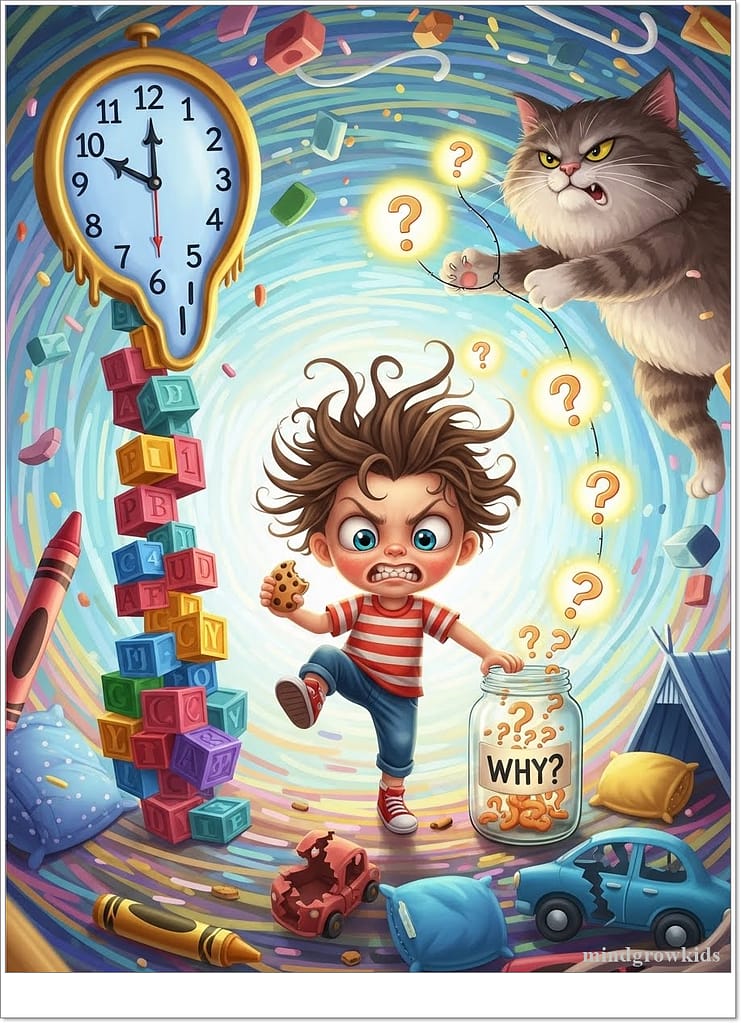
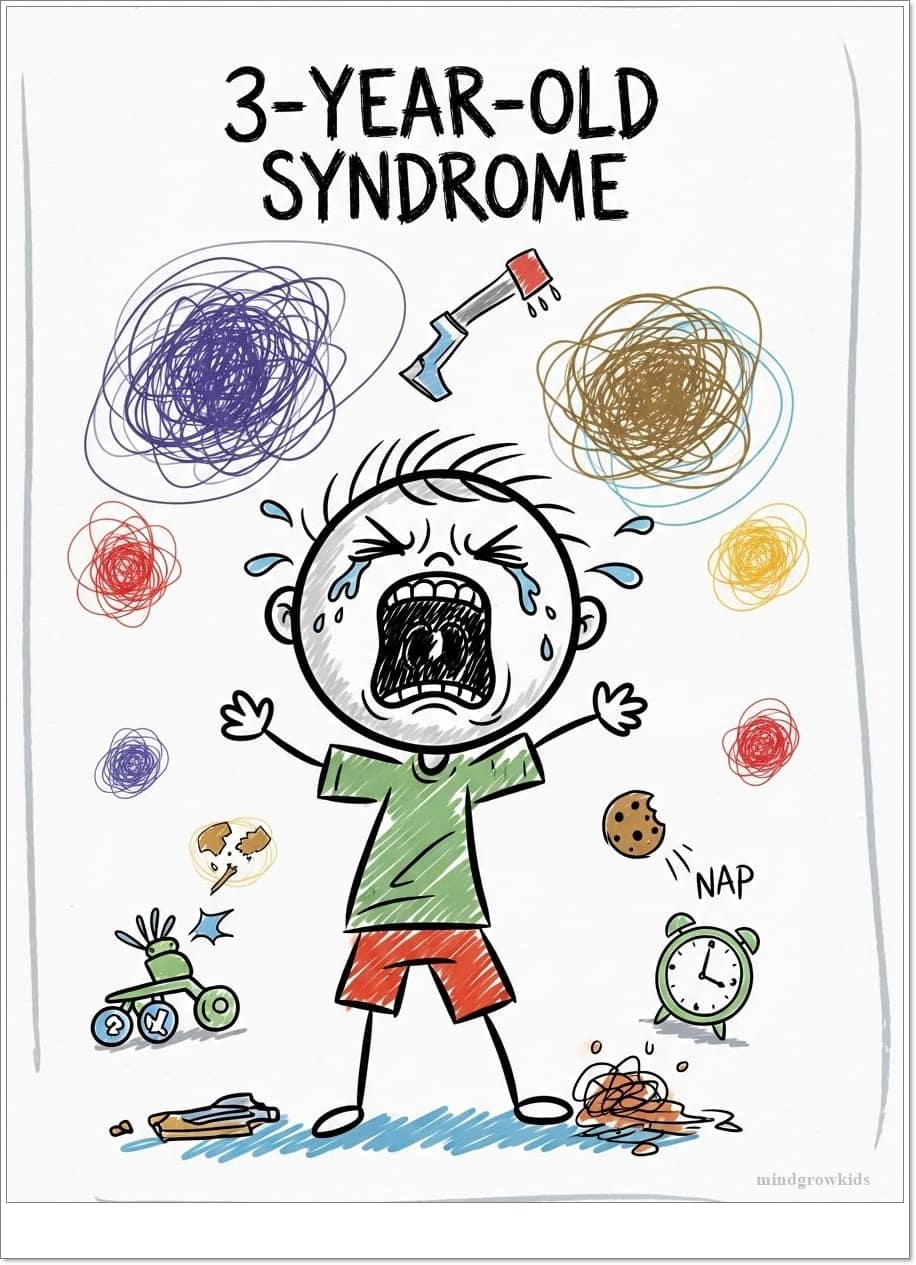
If your child yells when angry, clenches their teeth, pushes you, tries to react, or tries to damage things, this is not actually a character flaw. Or, as I mentioned, it’s not just that they’ve entered a “phase” or are part of a “syndrome.” This situation is your child’s developing brain trying to cope with big emotions.
So, how can they express their anger healthily, and how can you handle what you hear around you as the “terrible threes“? The answers are in this article.
First, let’s briefly talk about what you’ll find in this article. We will discuss why anger is experienced so intensely in young children. We will talk about how we should understand the anger of a 3-year-old. We will discuss healthy ways to teach them to manage anger, and we will close our araticle by talking about the parent’s role.
So, why can’t young children control their anger? Because their brains are not yet capable of doing so. Anger comes suddenly. Emotions are felt in the body. Heart rate increases, breathing changes, muscles tense. The urge to hit something begins. At that moment, the skills needed to stop, think, and express are not yet developed in a 3-year-old. Imagine, for a 3-year-old child, saying, “I am very angry right now because I can’t do what I want or I didn’t get what I wanted,” is nearly impossible. This is true even for children with very good development.
So, what can we do?
First, review your expectations. This is what we call the “small-steps” approach. Your child has already jumped a developmental step. They are not hitting but are growling. That’s huge progress. The next step now is for them to learn to express these big emotions in softer, more acceptable ways, we could say.
Second, teach bodily regulation. That is, co-regulation. Young children cannot calm themselves down alone. They can learn this by connecting with you, with your calmer nervous system. So, being a role model here will be very important.
How do we do this? When you hug them, hold their hand, or place their hand on your chest and say, “Look how your heart is beating,” your calmness will help them calm down too. Because you are guiding them. You are teaching them, by being a good role model, what to do when they are angry.
Third, allow the emotions but set limits on the behavior. What does this mean? Let me put it this way: “It’s normal to be angry, but you can’t push anyone.” Because getting angry is a normal thing. A good behavior? In fact, I’ll explain later; it’s a healthy state. Or you could say, “You can yell if you want, but no damaging toys.” As you’ll understand, the goal here is not to suppress the emotion, but to direct it.
What I’ve been trying to explain since the beginning of the article is: You are the role model. Children learn how to respond to anger through your reactions. If you don’t yell when you’re angry, if you take a break to calm down, if you explain what happened afterwards, your child will learn to do the same. I always say: Children don’t do what you say, they do what you do.
To briefly explain what you can do for your children: Show empathy. Understand how they feel, connect, guide them in the right way, and teach them how to navigate the behavior.
For example, you can reflect their emotion: “You are very angry right now because you didn’t get what you wanted. That is really tough.” You will make them feel that there is someone who understands them. These sentences won’t stop the anger instantly, but they give the child the message that “this feeling of mine is also accepted.”
For example, I can give you a few practice suggestions:
- Play a 5-minute emotion game every day. You can ask them how they feel. Imitate different facial expressions in the mirror, so they can learn what expressions we make when we are angry, sad, or happy, and what that means.
- Create scenarios like, “What do we do when we’re angry?” So you don’t have to wait for a moment when their empathy is low. Through such scenarios, you can teach them what to do when they are angry, even before they get angry.
- Or you can use emotion cards. Expressions like sad, happy, angry, or scared give them an opportunity to express themselves and explain more clearly.
Remember friends, anger is a natural and healthy state. The important thing is not to teach your child to suppress anger, but to manage it.
It may take years for a child to come to you and say, “I’m angry with you, so I don’t want to hug you.” But this journey starts with you.
Today, we tried to talk about why expressing anger is so difficult for children, how it can be healthily directed, and most importantly, how parents can be a guide in this process.
As I said at the beginning of the artaicle, there’s no point in naming everything a “syndrome,” just labeling it and leaving it at that. You need to understand what the thing labeled as a syndrome actually is so you can take steps towards a solution.
If you are trying to stay patient, compassionate, and conscious while walking this path with your child, you are not alone.
If you liked my article, don’t forget to hit the like button, subscribe, and share your experiences in the comments. See you in the next article. Take care.