
Have you ever thought about how science fiction films are produced? How do some people come up with all those fantastical creatures? Actually, we don’t have to look far for this. Many living things in nature are far more interesting than the creatures in science fiction stories. Have you ever seen a 6-meter-high anthill? Or a bird that can drink four times its own weight in water? Who do you think is the biggest bloodsucker? Can you imagine an animal that replaces another’s tongue? What if you kiss a frog so it turns into a prince and you can never part with it again?… All you need to do to develop your imagination is to get to know nature better. How about starting now?
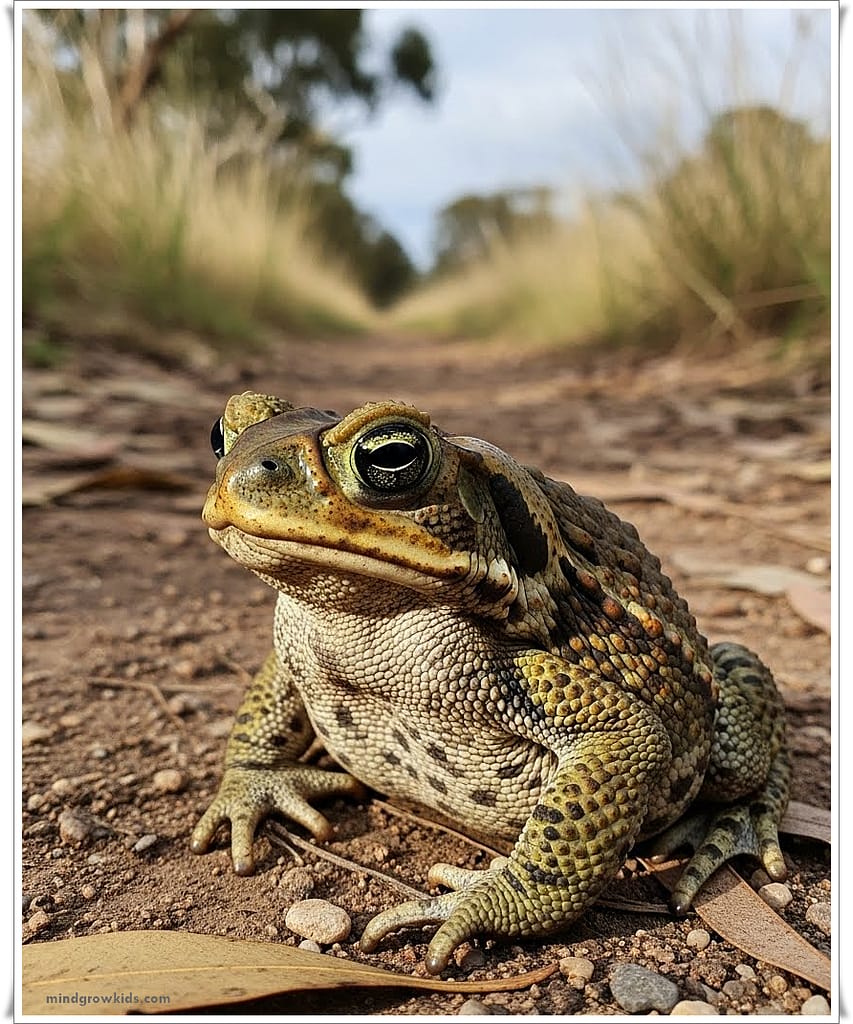
It Secretes Adhesive from Its Skin…
Some of the most interesting animals on Earth live in Australia. One of these is a species of toad unique to Australia. Unlike other toads, this toad’s unique ability is to survive in extremely hot regions where drought lasts for years. How does it do this? During the day, it digs a hole in the ground with its powerful hind legs to protect itself from the extreme heat and hides there. When the dry season begins, it digs a hole underground and lies dormant there until the rains begin again. This toad has another unique feature. Like other toads, it possesses specialized glands. Thanks to these glands located in its skin, it secretes a special sticky fluid when disturbed. This fluid hardens within a few seconds, transforming into a very strong adhesive unlike any other. Experts say it’s five times stronger than other natural adhesives. This sticky secretion is especially useful to the frog when attacked by ants. It can firmly adhere even the largest ant to its skin. This toad sheds its skin once a week and eats its old skin, making the ants that attack it a tasty meal during molting. Scientists in Australia are working to create an adhesive as strong as the substance secreted by this frog. This adhesive could even bond glass and metal. More importantly, it’s said to be useful for repairing cracks in cartilage and other body tissues. Who knows, in the future, it might even be used to repair the most difficult wounds!
This Hummingbird Is Very Thirsty!
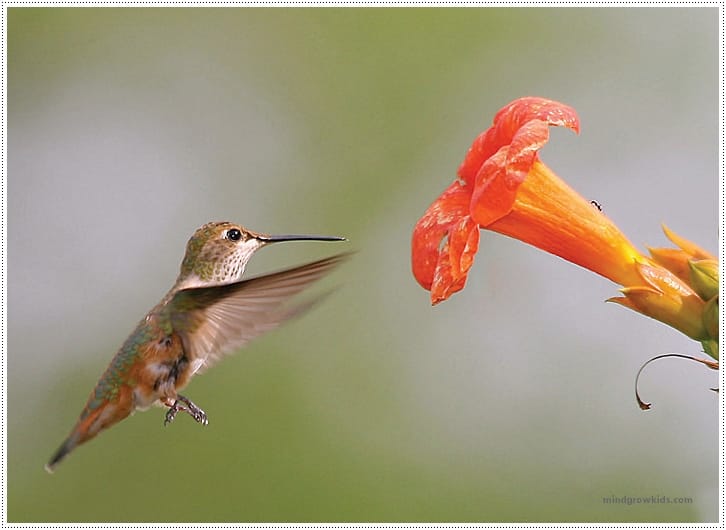
Did you know that hummingbirds drink enormous amounts of water? Water makes up the rest. Hummingbirds flap their wings so fast we can’t even follow them with our eyes. To do this, they need a large amount of sugar. Therefore, they’ve evolved to drink the nectar of flowers. The nectar produced by flowers contains only 30% sugar. To obtain this amount of nectar, they drink five times their body weight in water per day. Can you imagine drinking 200 kilograms of water every day? How can hummingbirds drink so much water when no other animal, including humans, drinks even its own body weight? Hummingbirds’ beaks are so small that they can’t even hold their own body weight in water.
While the body has evolved to drink its own juices, its kidneys have also developed to handle even the most strenuous tasks. Furthermore, some of the water it drinks is immediately excreted, bypassing the kidneys. Eighty percent of the water goes to the kidneys to be eliminated from the body as well-diluted urine. A species of hummingbird, the broad-tailed hummingbird, which lives in North America, is particularly advanced in this regard.
What Happened to Its Tongue?
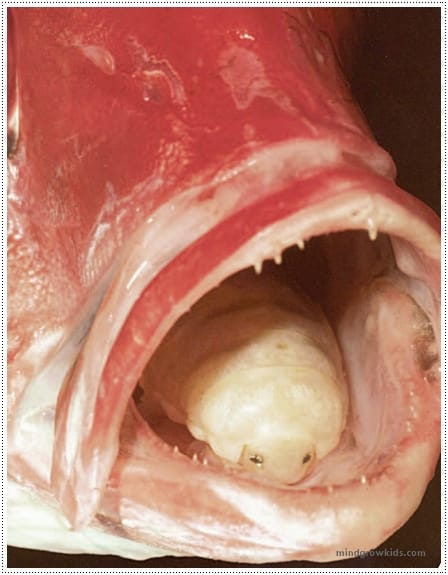
This sea creature, which can grow up to 4 cm, eats the tongue of a fish species and then replaces it.
Can you imagine an animal inside another animal’s mouth, behaving as if it were its own tongue? Here’s a shelled marine creature called an isopod, acting just like a tongue. Most isopods live normal lives as herbivores, carnivores, or detritivores. Some live parasitic lives on other animals. One of them has chosen the mouth of a fish species as its home. How? It first hooks onto the fish’s tongue with its hooked feet, where it initially feeds on mucus, blood, and tissue. Over time, it eats the animal’s tongue entirely. It then clings tightly to the base of the tongue, acting as if it were the fish’s tongue. As the fish grows, it grows along with it, feeding on the remaining pieces of flesh the fish eats. The largest isopod ever found measured 39 mm, but experts say it could grow until it reaches the tongue size the fish needs. In reality, this relationship isn’t as dire as it seems. While the isopod is developing, the fish can continue its development by feeding. However, no one knows what will happen when the isopod decides to settle in the mouth of another fish. This animal is known to inhabit the eastern Pacific Ocean, from Mexico to Peru. But this interesting relationship between fish and isopods has so far only been found in the Gulf of California. No one yet knows why!
Who is the Biggest Bloodsucker?
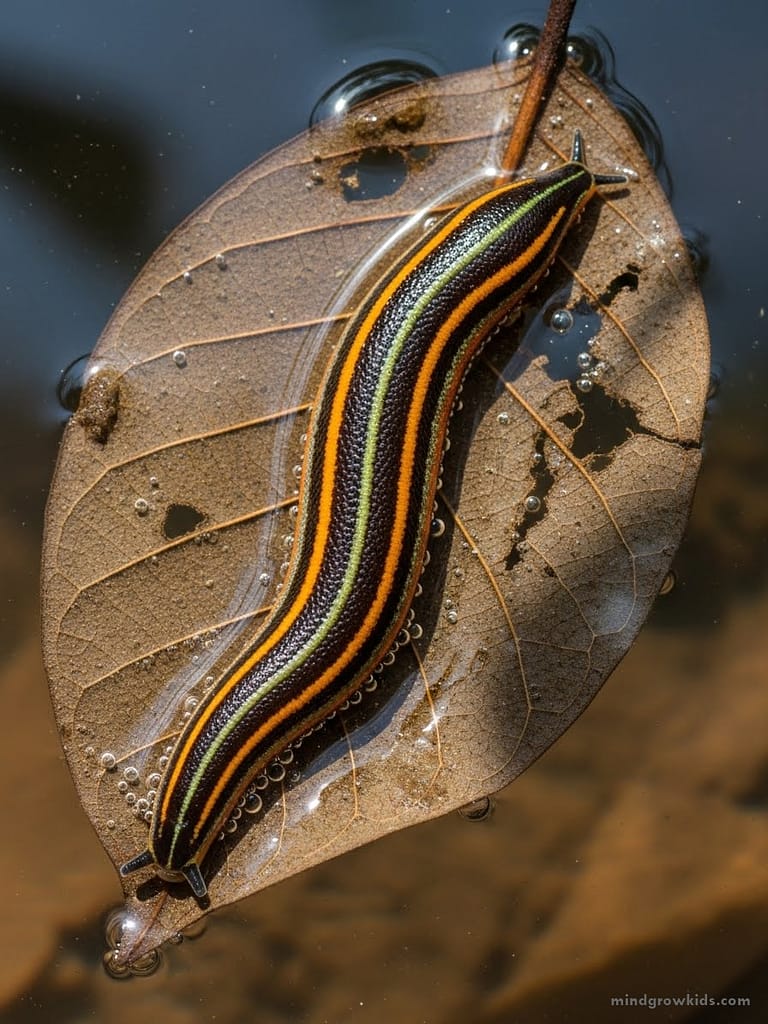
o you know who the biggest bloodsucker is? We almost heard you say the vampire bat. However, that’s not the answer. In fact, a vampire bat doesn’t suck blood; it drinks it. It finds a large mammal, such as a cow, pig, or horse. It makes an incision in the animal’s skin and then drinks the animal’s blood. Vampire bats average around 6.5-9 cm in size. A single bat can only drink a few tablespoons of blood per night. However, a substance in its saliva prevents the blood of the animal it bites from clotting. In other words, after the bat has eaten its fill and left, the bite site continues to bleed for a while. Here is our biggest bloodsucker: The Amazon leech. The 46 cm long Amazon leech is a true bloodsucker. A truly hungry leech can suck four times its own body weight in blood before it’s full. Since an Amazon leech weighs about 50 grams, the amount of blood it sucksits tar is almost the size of a glass of water! Like the vampire bat, the Amazon leech feeds on the blood of large mammals. It attacks its prey when it enters the water and, like the vampire bat, secretes a special substance to prevent blood clotting. However, in addition to this substance, the Amazon leech also secretes a numbing substance into its prey’s body.
This way, while the leech feeds, the prey doesn’t even realize what’s happening. Leeches are classified as annelid worms. Their closest relatives are earthworms. Regardless of body size, all leeches are composed of 32 annelids. The Amazon leech has several rings at each end that have evolved to allow it to cling to its prey. Each ring has its own independent nerve center. This means a leech has 32 brains!
The Master Architect
Did you know that some ant species cultivate fungi inside their nests? Around 3,500 species of insects and 330 species of termites (white ants) also cultivate fungi in their nests in a similar manner. However, none of them have a more challenging task than African termites, as they employ slightly more specialized methods. This fungus, which plays a crucial role in African termites‘ diet, grows exclusively in their droppings.
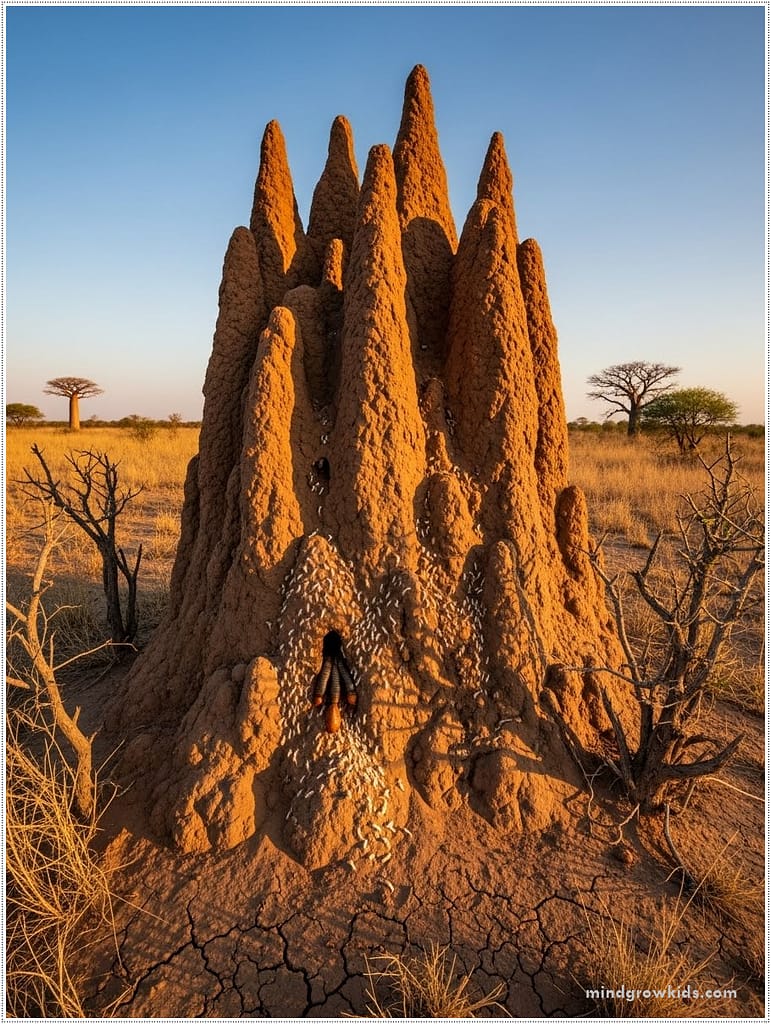
However, for these fungi to thrive, the temperature must be precisely regulated. The optimal temperature for this is 30.1°C. A slight drop or rise in temperature inhibits fungal growth. Therefore, African termites must build their nests to maintain this temperature. Termites build their nests over a moist depression. They dig at least two holes extending down to the subsurface water layer.
They also prepare a chamber 3 meters in diameter and 1 meter deep. In the center of the chamber, they erect a column to support the nest. This chamber is used for the queen termite, the young termites, and the fungus. The ceiling of this chamber features thin circular condensation veins. Ventilation channels line the edges of the mound. They build hollow towers, resembling fairy chimneys, that extend up to 6 meters above ground. The diameter of each of these towers is adjusted to maintain proper airflow and humidity, ensuring the mushrooms maintain a temperature of 30.1°C (99.7°F), regardless of the outside temperature. Considering that worker bees are only 2cm (0.7 inches) tall, it’s easier to grasp just how massive these structures truly are. For human-built buildings to be comparable, they would need to be 180 stories tall!