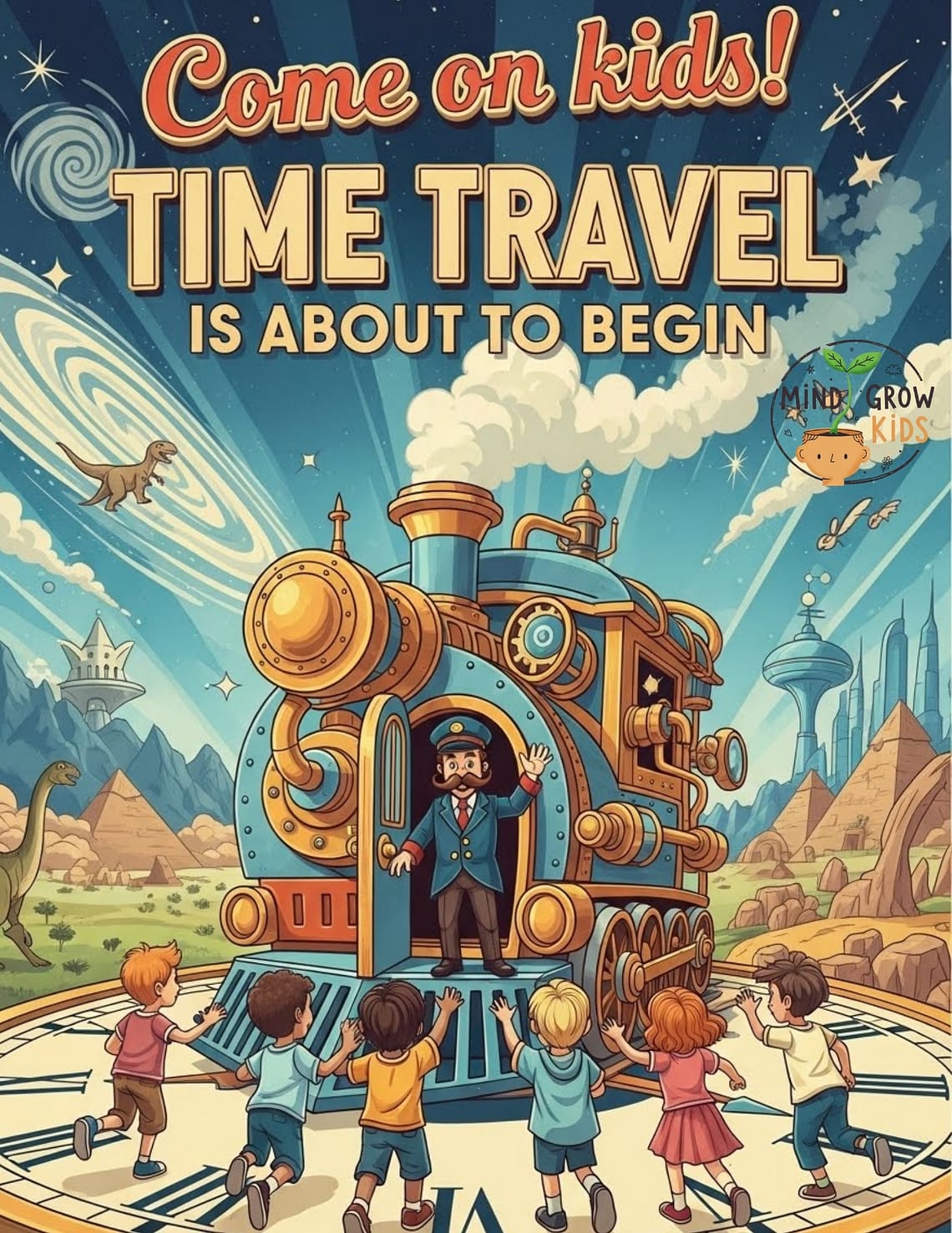
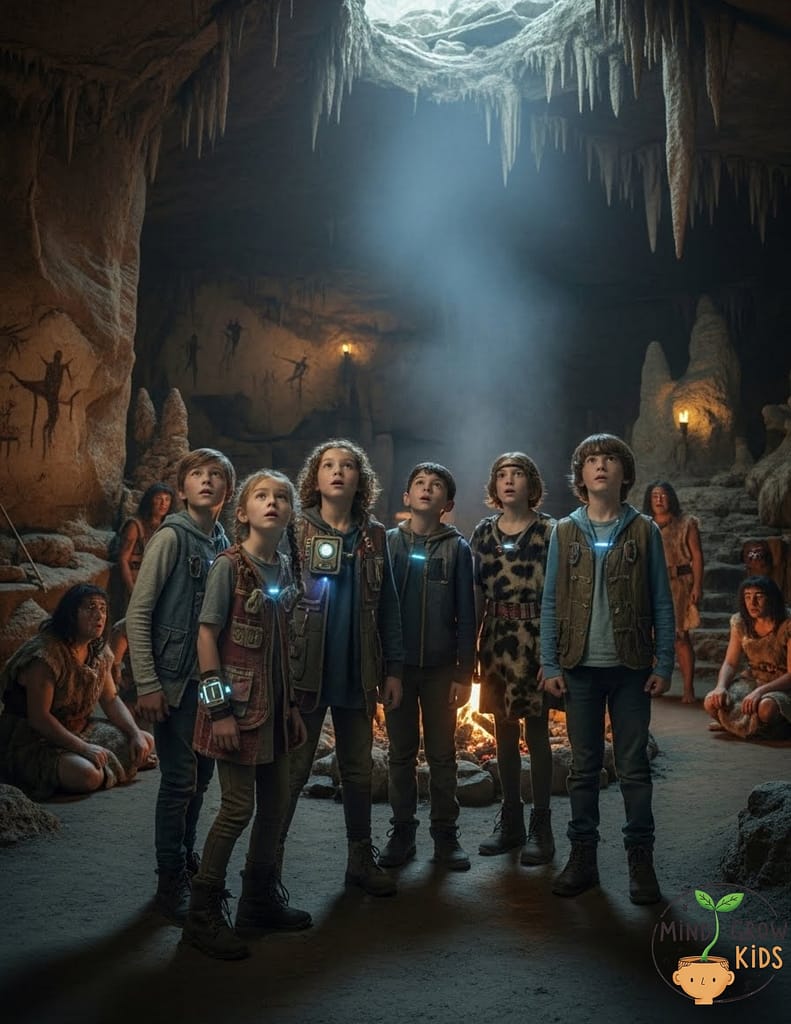
How about we do some daydreaming? Imagine you have a time machine. One that moves very fast and can take you to the past! Where would you want to go with this machine, to what time period? How about the era when the first humans lived? And wouldn’t it be fun to go back to your parents’ childhood years and see them? Perhaps it would be even more interesting to go back to ancient times and see how scientists made their discoveries. Let the countdown begin! Time travel is about to begin!
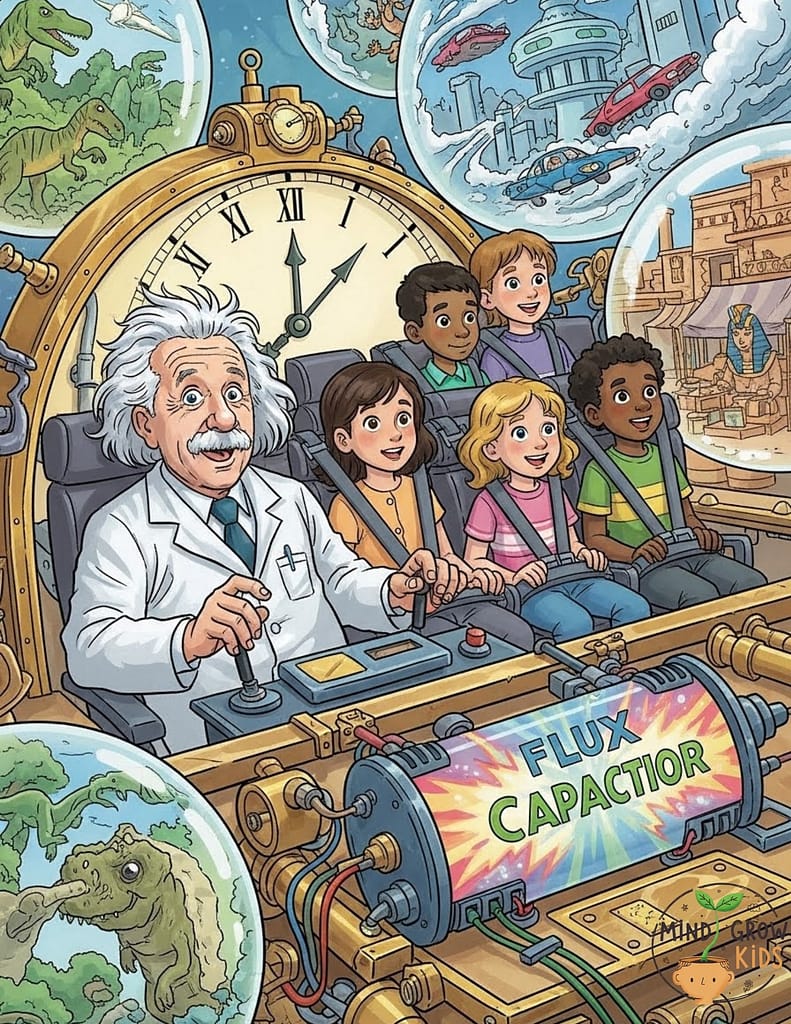
The famous scientist Einstein made important contributions to the field of physics; in fact, these contributions earned him the Nobel Prize in Physics. Einstein believed that “when objects move at very high speeds, time will slow down for those objects.” The idea of ”time slowing down” sounds interesting, doesn’t it? It’s impossible for us to encounter such a situation in our daily lives. However, we can liken the slowing down of time to a slowed-down film. How slowly people move in such a film. The slowing down of time is similar to this. But could there be a speed great enough to cause time to slow down? According to Einstein, it “could be,” and this is a speed approaching the “speed of light.”
Have you ever wondered what the speed of light might be? Scientists have tried to calculate the speed of light for many years by conducting various experiments. The discovery of the “laser” in the 1960s changed things a lot. The laser is a “light that travels in a certain direction without much scattering.”
“It is a beam of light.” Physicists have made precise measurements using special devices that produce lasers and have found that light travels at a speed of 299,792 kilometers per second. This means that light has a speed of approximately 300,000 kilometers per second. Incredibly, this speed is many times greater than the speed of an airplane. Considering that light travels from the Sun to our Earth in about 8 minutes, it shouldn’t be surprising that it is so fast, right?
Einstein said that “when objects move at a speed close to the speed of light, time is more…” Let’s explain what he meant by “it moves slowly”: Imagine you have a spacecraft traveling at near the speed of light. Only Efe, one of the twin siblings Efe and Ece, gets on the spacecraft and travels with you. Ece stays on Earth. This space journey with Efe lasts about 1 year. When you return, you realize that, for example, 10 years have passed on Earth. So the twin siblings are no longer the same age. Of course, you are not the same age as your peers either. Because, compared to those you left behind on Earth… You are younger. Time has slowed down in the spacecraft. In 1971, an event similar to the situation we mentioned above occurred. Researchers Joe Hafele and Richard Keating, wanting to test Einstein’s theory, took a very sensitive watch with them and traveled around the Earth by plane. They left a copy of this sensitive watch on Earth. Although the plane was traveling at a much slower speed than the speed of light, the watch they had with them lagged behind the watch they left on Earth. Although this small time difference between the two watches did not cause very big changes in their lives, it was a “small journey through time”.
We can say “they have done it.” But can we travel through time by “slowing down time“? As we mentioned before, there is currently no spacecraft traveling at near the speed of light! Our inability to move at near the speed of light is a significant obstacle to our ability to travel through time. But scientists are continuing their work on this subject. Perhaps one day “time travel” will become a reality!