Who knows how much fun it must be to delve into archaeology and trace the remains of ancient civilizations? Just think, there are many civilizations that existed thousands of years ago, such as the Sumerians, Ancient Egyptians, and Mayans. It’s impossible not to wonder how these civilizations lived, what they discovered, and what artifacts they created. Archaeologists are also very curious people, and they research ancient civilizations at excavation sites around the world. Frankly, it’s not an easy task. However, bringing the knowledge of ancient civilizations to light brings them so much joy that they work tirelessly. Indeed, they are being rewarded for their efforts. For example, recently, a group of researchers made a significant discovery while tracing the thousands of years old Mayan civilization. This discovery has implications for the history of writing
Writing was first encountered in civilizations in Mesopotamia, Egypt, China, and the Americas. The findings in America are from a region called “Mesoamerica,” home to ancient civilizations like the Mayans. These findings date the invention of writing to around 250 AD. In other words, it was… Because studies conducted at the San Bartolo excavation site in Guatemala showed that the Mayans were able to write between 200 and 300 BC. Thus, the oldest Mayan manuscripts were found. In fact, archaeologists have discovered many Mayan manuscripts. So why did researchers find the correct date so many years later?
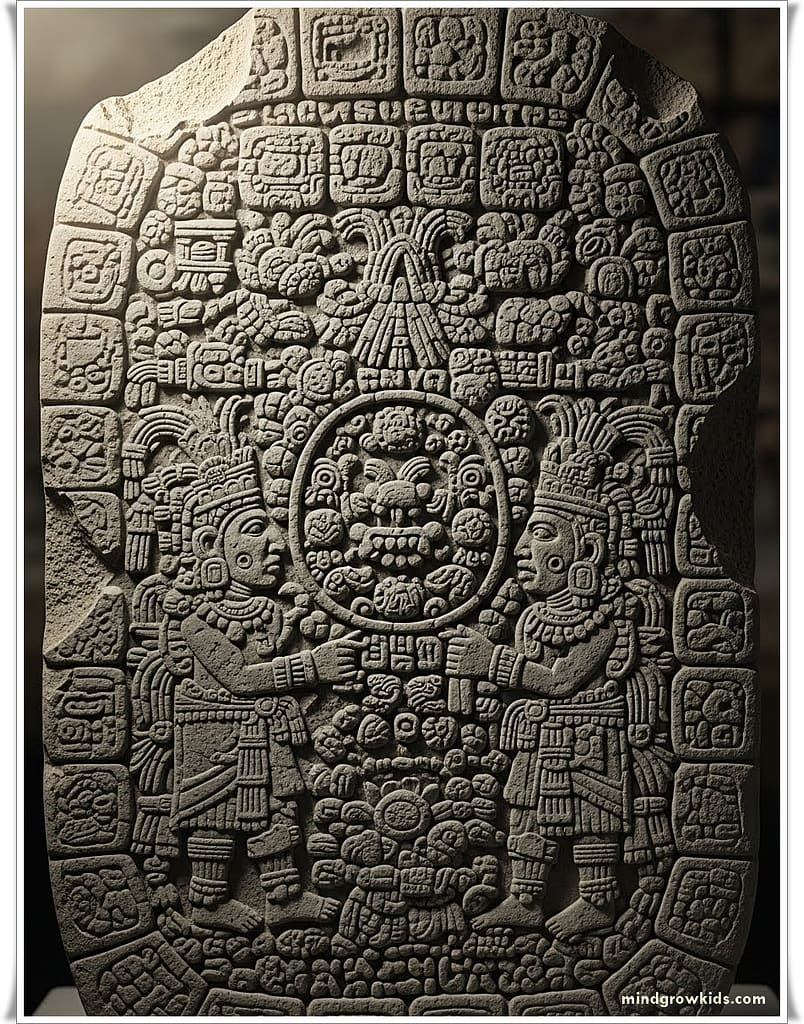
When we talk about the Mayans, we’re talking about a civilization that existed two thousand years ago. You might imagine that this civilization had incomparably fewer opportunities than ours. Of course, the Mayans established a great civilization. They made great advances in architecture, astronomy, and mathematics. However, they lacked pencils, paper, and most importantly, an alphabet like the ones we use today. They mostly wrote on stones. Their writing system, like that of many ancient civilizations, consisted of a pictorial script called “hieroglyphics.” Pictorial writing may seem easy to some. One might think that the images would immediately reveal what was written there. Indeed, researchers in astronomy deciphering the relevant manuscripts was no problem. Because the meanings in these manuscripts could be understood through signs like the sun or moon.
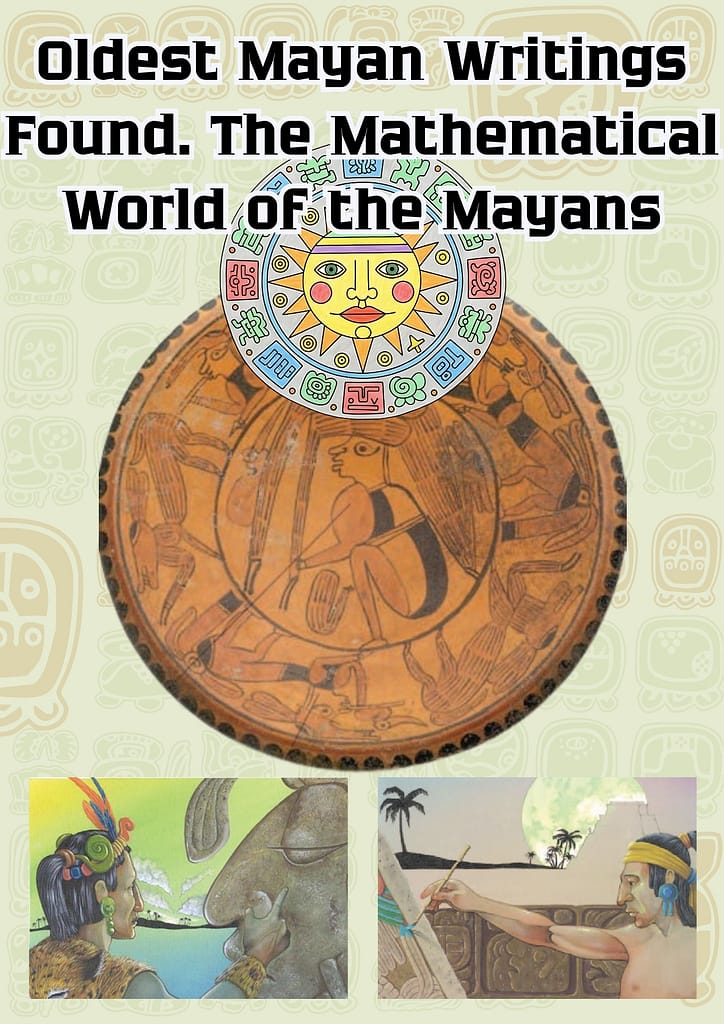
However, the manuscripts contained hundreds of signs that were not easily understood and could not be compared to anything else. Deciphering these signs, and understanding the Mayan alphabet, took many years. South America came under Spanish rule in the 1500s. Diego de Landa was one of the first Spanish clerics to arrive in South America. He studied the Mayan language and writing system. His goal was to decipher the Mayan alphabet. Seeing that hieroglyphs were composed of signs, he reasoned that each sign represented a letter and developed a clever method for finding them. To this end, he collaborated with a local Spanish-speaking individual. Based on the pronunciation of Spanish letters, he began searching for Mayan letters. Consider the letter “B.” This letter is pronounced “beh” in Spanish. Diego de Landa tried to determine which Mayan alphabet represented the letter pronounced this way. As he pronounced the letters, his collaborator pointed to the corresponding signs. At the end of the study, Diego de Landa declared that he had deciphered the Mayan alphabet. However, researchers were unable to read the Mayan inscriptions with this alphabet. When they combined the letters, they found that the resulting words were meaningless.
The Mayan alphabet remained a mystery for a long time, until 1950, when university student Yuri Valentinovich Knorosov was given an assignment by his teacher. As you might expect, Yuri’s assignment was to decipher the Mayan alphabet! His teacher encouraged him by saying, “If an alphabet was invented by humans, it can be deciphered by humans.” Yuri first examined older works and, after working for a while, spotted the error in Diego de Landa’s alphabet. He discovered that the signs in Mayan hieroglyphs sometimes represented letters and sometimes syllables.
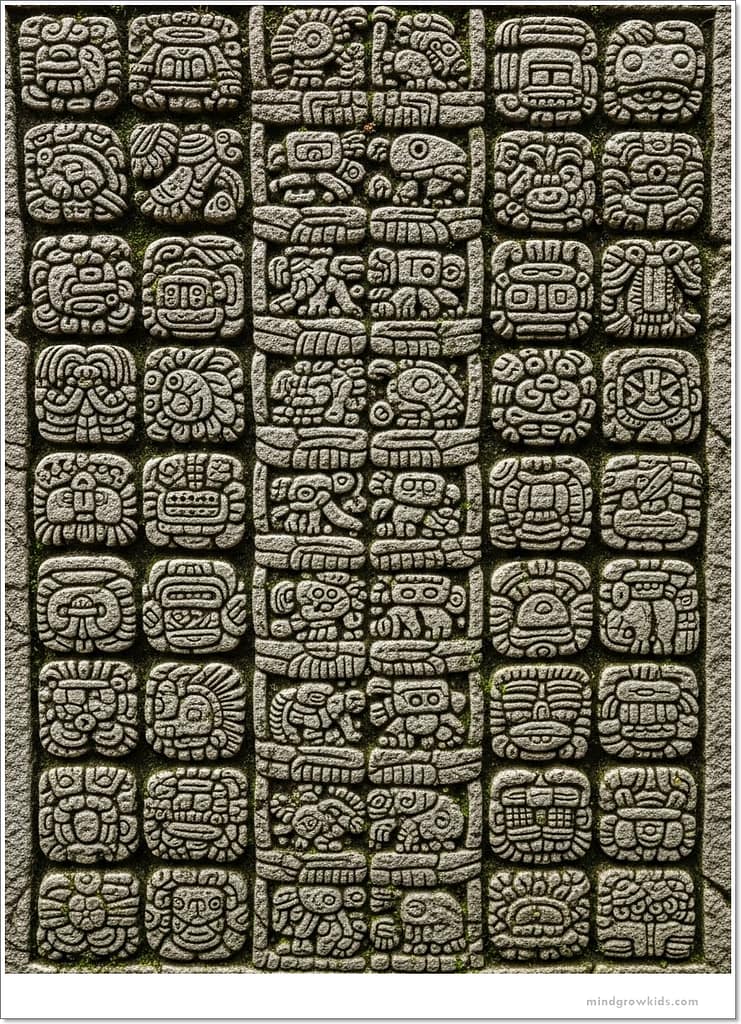
For example, the hieroglyph for the word “kakaw,” thought to mean chocolate in the Mayan language, consists of three signs. That is, it contains the syllables “ka,” “ka,” and “wa.” The “a” at the end of this word is also unreadable. Of course, Yuri made an important discovery, but it wasn’t that easy. Many points were overlooked. After Yuri, research into the Mayan alphabet accelerated. Today, the Mayan language is almost deciphered. Most of the Mayan manuscripts can be read. However, there are still areas that remain unclear. As you can see, the Mayan writing system was very complex. This complexity has also given researchers considerable trouble. Another issue that has preoccupied them is the as we mentioned, their first attempt was to date the pictograms they wrote on stones. However, the “radiocarbon” method used in the dating process didn’t work on the stones. Because there were no living remains in the stones. It’s hard to establish a connection, isn’t it? Let’s start from the beginning. You know the element carbon. This element is one of the building blocks of living things. Moreover, “isotopes” of carbon are also found in living things. You can think of isotopes like the apple varieties of the chemical world. Just as an apple has varieties with very slight differences, so too does an element there are varieties with slight differences in terms of atomic structure. The building blocks of elements are atoms. In the nuclei of atoms, particles called protons and neutrons are found. These neutron particles provide the diversity of an element. This is because atoms of an element can have the same number of protons but different numbers of neutrons in their nuclei. Varieties with different numbers of neutrons are called isotopes of that element. The discovery of isotopes of carbon in living things is a great boon for archaeologists.
This is because these isotopes are radioactive. In other words, they undergo chemical changes in the rays coming from the sun. Scientists can measure this change. This way, they can radiocarbon date anything containing living remains. Researchers working at the San Bartolo excavation site also happened to find manuscripts containing living remains. Every profession has its own unique challenges. So, what is the significance of all this research and discovery? The history of writing in the civilizations of Mesopotamia and Egypt dates back 3,000 years. Currently, the findings in Mesoamerica suggest that writing emerged later. Researchers are curious about the relationships between ancient civilizations around the world and are investigating this. For example, could writing in Mesoamerica be much older? Studies on the Maya continue. New findings emerge all the time, and as science and technology advance, processing and evaluation of these findings becomes easier.
Mysterious Civilization: The Mayans
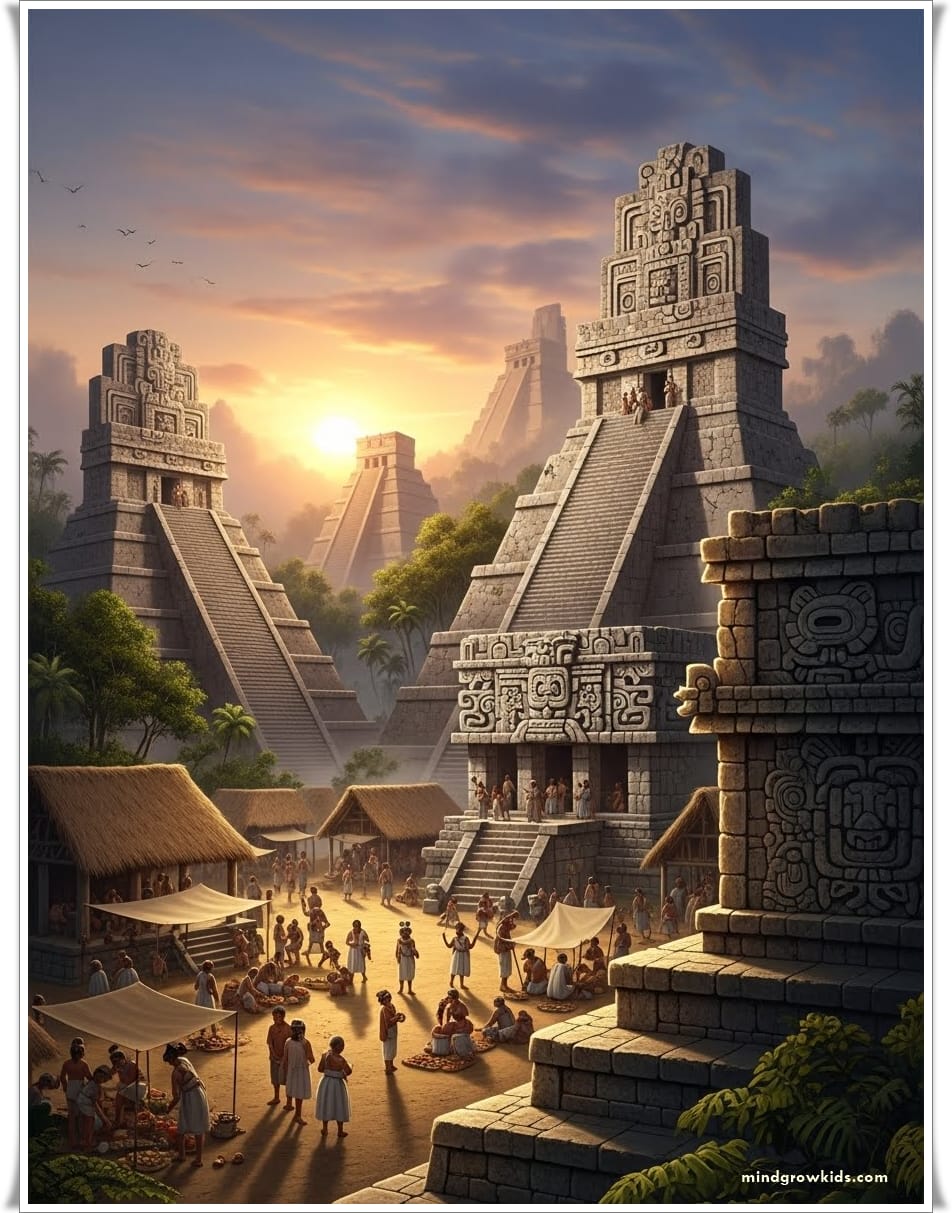
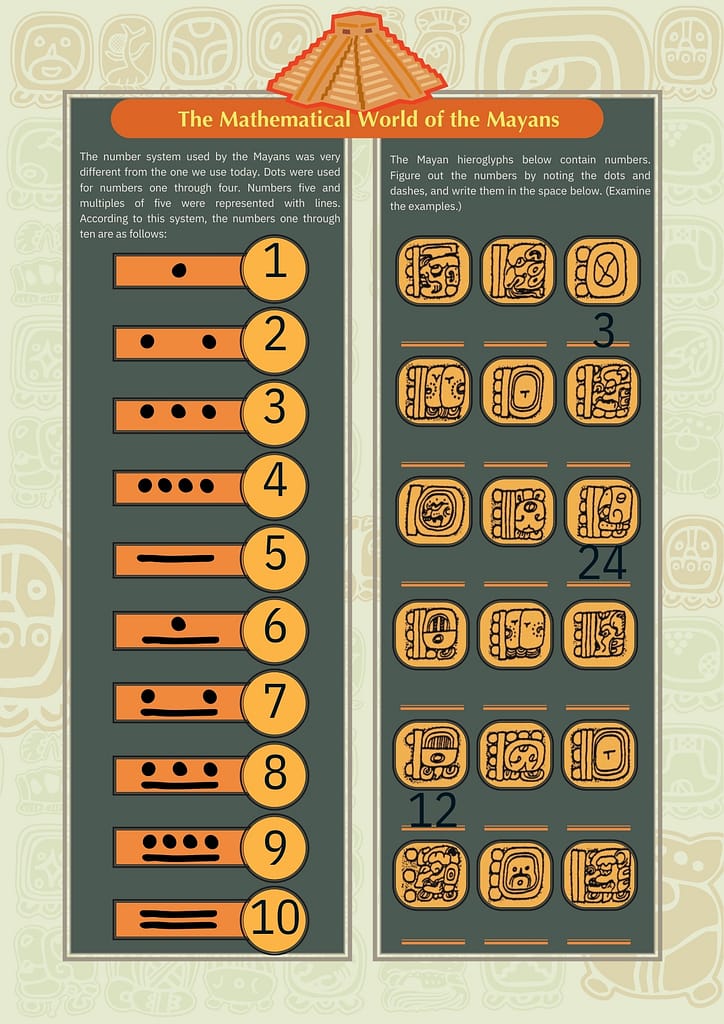
The Mayans lived in the region now known as Mexico, Guatemala, El Salvador, and Honduras. They sustained their civilization, which lasted thousands of years, through agriculture. Because agriculture required tracking the seasons and months, they developed a calendar. Apparently, the Mayans had quite advanced mathematical knowledge. However, unlike our base-10 counting system, they had base-20 numbers. Larger numbers were expressed as multiples of twenty. The Mayans lived in cities and developed their own architecture. These cities were ruled by kings. They built large temples resembling the pyramids of the ancient Egyptians. They also dabbled in astronomy and made important discoveries about the stars. The movements of the stars were given importance. Every twenty years were celebrated. During these celebrations, kings would erect large stones. Researchers believe they wanted to establish a connection between these stones and the gods, the sky, and life itself. There are other interesting findings about this great civilization. For example, the Mayans’ primary diet was corn. They also loved chocolate. They called a drink similar to hot chocolate “the drink of the gods.” They loved wearing jewelry and valued their beauty. Jade was the most commonly used stone in jewelry. However, for reasons still unknown, this civilization began to decline around 900 AD and disappeared from history. When the Spanish conquered South America, there were also people of Mayan descent living there. These people continue to maintain a great civilization.
Sources: Coe M. D. “If People Wrote It, People Can Read It” Muse November 2000 http://whyfiles.org/shorties/194maya/ http://www.mayankids.com/