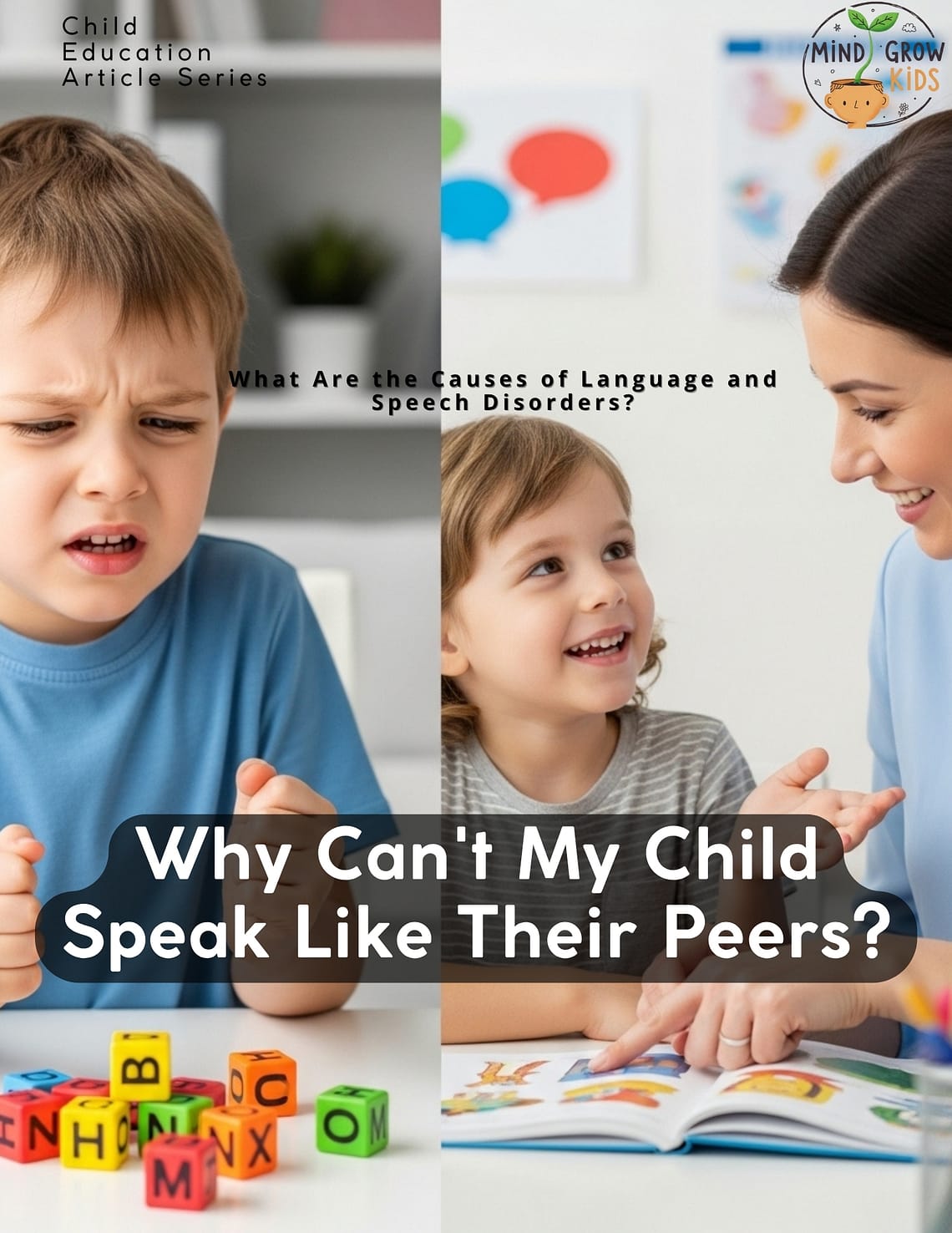
What Are the Causes of Language and Speech Disorders?
Author: Buket Özdemir. Speech and Language Therapist
“Do you ever find yourself asking questions like, “Why can’t my child speak like their peers?“, “Why aren’t their language and speech skills good?”, or “Why isn’t my child talking yet?” If these questions are on your mind, in this article I’ll talk about why children’s language and speech skills may lag behind.
Hello, everyone! Dear moms, dads, teachers, grandmothers, grandfathers… In short, everyone who spends time with children!
If this is your first time here, let me briefly introduce myself: I’m Buket, a certified speech and language therapist. In this article, I’ll share tips to help your children speak more fluently.
At the end of this article, I’ll give you a free resource on how to support your children’s language and speech skills anytime, anywhere, so don’t miss it!
So, why don’t some children’s language and speech skills match those of their peers? There could be many reasons for this. I will explain the most common reasons, but first, we need to make a very important distinction: we must understand the difference between language and speech.
If a child isn’t speaking like their peers, is it because of their language skills or their speech skills? Some of you watching may be thinking, “I already know that,” and of course, you do. But honestly, when I started college, I didn’t fully understand this distinction. Many parents are also unaware of this distinction. Of course, it’s not something everyone has to know, but we’re here to learn!
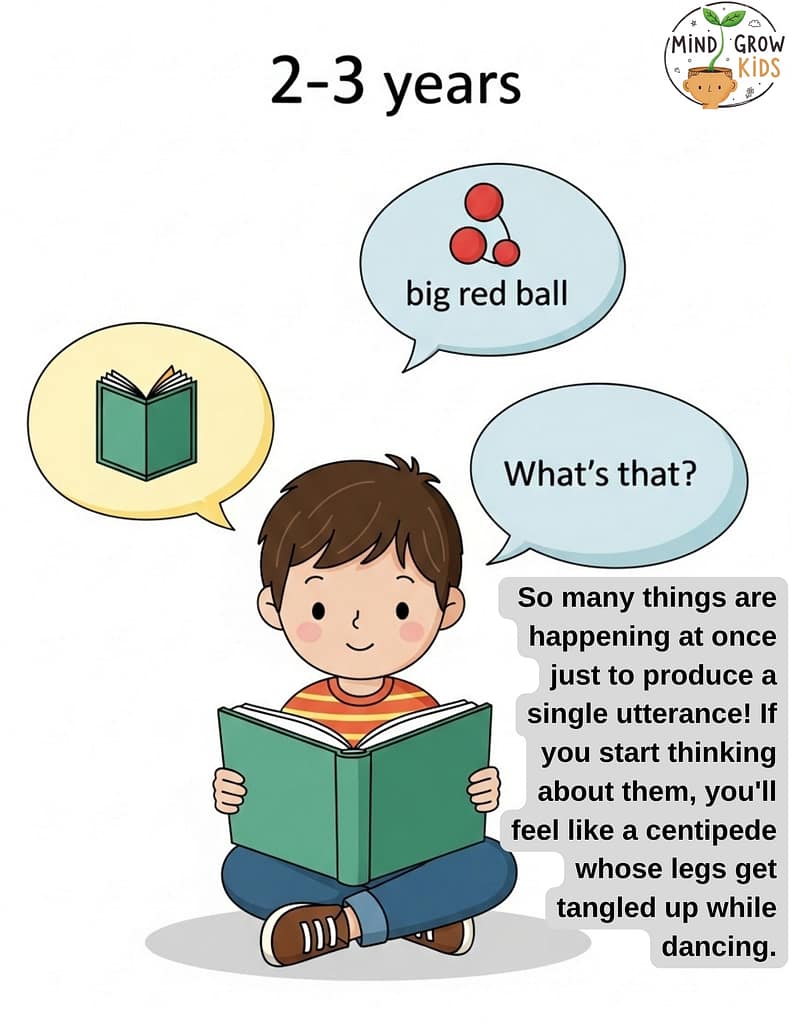
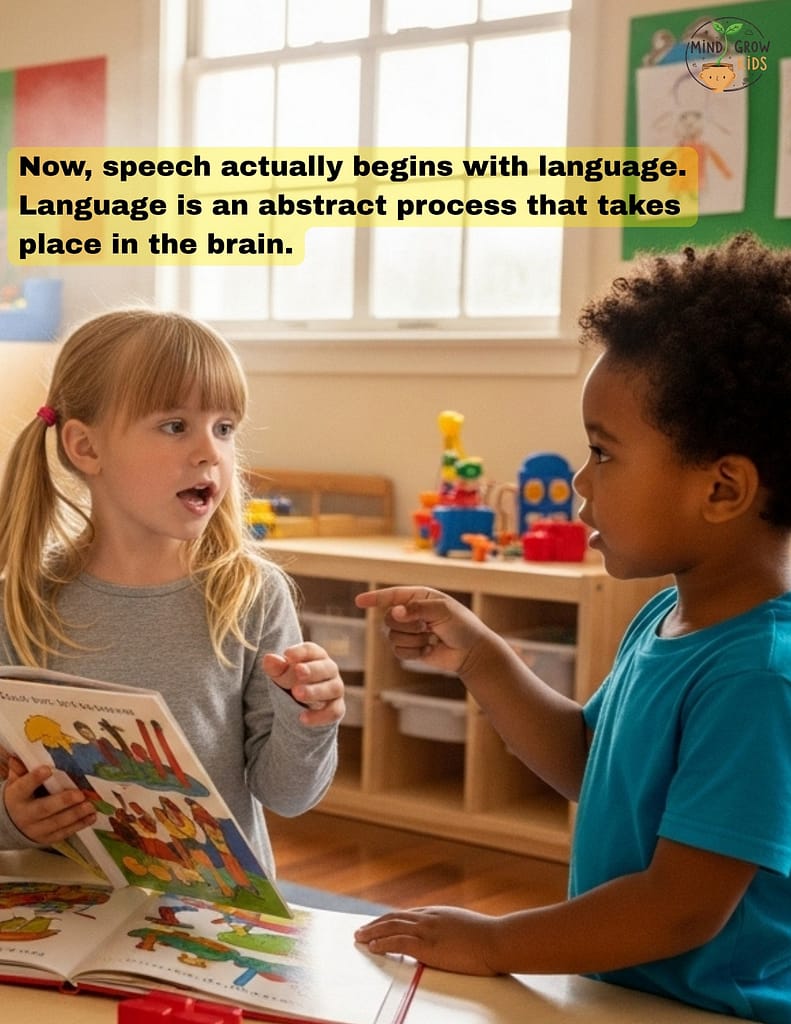
Now, speech actually begins with language. Language is an abstract process that takes place in the brain. It’s not just speaking; it’s not writing, and it’s not sign language. Language is how we express our symbols and thoughts, our feelings, what we want to share, our stories. We’re doing that right now by talking, which brings us to speech.
There are so many components to speech that it’s unbelievable. So many things are happening at once just to produce a single utterance! If you start thinking about them, you’ll feel like a centipede whose legs get tangled up while dancing. I want to mention a few of these components because knowing them, even briefly, is very valuable in understanding where your child’s problems might be coming from.
For example, what do I do just to say “look”? The air in my lungs vibrates my vocal cords, my throat vibrates. I close my lips to say “ba” and open them to say “ak.” So much happens just to say one short word. It’s actually very normal for children to struggle with learning to speak and to be late in producing certain sounds. Now let’s get to the main point: Why do children lag behind in language and speech development? And why isn’t your child speaking like their peers? Many of these language and speech problems develop beyond your control, while some are entirely within your control. But no matter what, it’s always up to you to support your child and do your best.
Some problems in children’s language development, in particular, are thought to be genetic. It is noticed that many children with language disorders have relatives—even if not necessarily in their immediate family—who also have language, reading, or speech disorders. So genetics is one factor. But of course, we don’t know exactly which gene causes this in every case.
For example, syndromes such as Down syndrome can also affect these children’s language and speech skills. If this is the case, you will know it from the moment your child is born.
Speaking of birth… Premature birth and low birth weight can also cause language skills to lag behind. Because the brains of premature babies are not fully developed, they may lag behind their peers in developing language skills when they are born. If you’re wondering, one of the reasons why language development may be slightly delayed in twins is premature birth. Of course, this is not the only reason; there are other reasons, which I will discuss in another araticle.
Now I’m going to talk about a very important topic: hearing loss. Just because your child passed the hearing screening at birth doesn’t mean their hearing will always be perfect. As you know, children get sick often. Because their ears and the structures inside their ears are smaller, they get middle ear infections much more frequently, and fluid builds up in their ears. When this happens repeatedly, it can cause hearing loss.
This loss does not necessarily mean they cannot hear at all. In the early years, when language development is very rapid, even minor hearing losses can negatively affect language development. Hearing loss affects not only language but also speech development. This is because if children cannot hear or distinguish certain sounds properly, they cannot produce them correctly.
If you have thoughts such as “my child’s language development is behind,” “my child still isn’t talking,” or “they can’t produce, understand, or distinguish certain sounds,” have your child’s hearing checked by a specialist.
Another reason is autism. Many parents suspect autism first when their child is not talking or their language development is delayed and they notice certain problems. Autism is actually a communication disorder, not just a language or speech disorder. Individuals with autism may exhibit different behaviors: lack of eye contact, reluctance to
communicate, not playing with toys like their peers… While their peers are driving cars, they may only spin the wheels or line up the cars. Other behaviors include adherence to routines, not looking when their name is called ( ), not pointing out things that interest them, and not trying to get your attention.
Of course, every child with autism is different, and it is difficult to say that they all have the same symptoms. However, if you think your child has problems not only with language and speech development but also with communication, making eye contact, and showing interest in the same things, I strongly recommend that you seek an expert’s evaluation.
Apart from that, if your child’s language and speech skills have reached a certain level and then regressed or are no longer progressing, I recommend that you consult with specialists and get an evaluation in such cases as well.
Another reason could be structural problems. Your child may have problems stemming from their mouth and teeth structure. They may have a cleft lip or palate. But if this is the case, you would already know from the moment they were born. A cleft lip or palate can affect the production of certain sounds.
We mentioned that language and speech are different. They are more likely to cause problems related to speech. Tongue tie, for example… Many parents say that their child’s language development is delayed due to tongue tie. Sometimes tongue tie can lead to speech problems. Since the tongue cannot move freely inside the mouth, producing certain sounds may become difficult. Of course, the severity of this and the difficulties it creates for the child vary from child to child.
Now I’m going to talk a little bit about the factors that are within your control, because they are very important. If you watch this channel, follow us on Instagram, or are a member of our Facebook groups, you already know that my goal is to show you how to prevent these kinds of things and how to provide your child with the best, highest-quality opportunities.
Stimulation deprivation… What is stimulation deprivation? If a child does not have all the opportunities necessary for language development, if no one communicates with them one-on-one or if this happens very rarely, if the parents do not fully respond to the child’s communication requests, these can also cause the child’s language skills to lag behind. So, keep talking to your child; that’s great. But also observe and listen to your child. What is your child showing you? How is your child trying to communicate with you? When your child tries to communicate with you, if you immediately notice this and respond, if you answer this communication attempt, you are sending a very positive message to the child: “If I communicate, my wishes come true, I can attract attention, my needs are met.” This increases children’s desire to communicate, especially verbally.
Speaking of lack of stimulation, we can’t leave out screen time. I made a much more detailed video about this, and I’m putting the link above and below. Screen time exposure before the age of two can cause delayed language development in children . Studies show that children exposed to screens learn fewer words and have more delayed language skills than their peers.
Of course, there are many reasons for this. One is that the child is passive and not interacting. Also, screen time at home may not only be excessive for your child, but also for you. This can create background noise. Children really need one-on-one communication and interaction. I recommend interacting with your child one-on-one. It’s not just about not staring at the screen or not seeing you while you talk to someone else. The important thing is to talk to them one-on-one and respond to their attempts to communicate.
Finally, I want to mention unknown causes. You may or may not like to hear this, but sometimes the cause of language and speech disorders is unknown or can be linked to many causes. These disorders can sometimes cause children to be unable to produce sounds correctly, to change the place of sounds, or to mix up sounds. For example, a child who says “topet” instead of “dog”… This is normal up to a certain age, but if it continues beyond a certain age, if the child mixes up sounds or cannot say certain sounds, sometimes the reason may not be fully known. Not knowing the cause doesn’t mean we can’t support a child. The cause of some language disorders is not fully understood; it may be genetic, but there are still many ways to support children. I already talk about these methods regularly on Instagram and YouTube. Subscribe and follow us. We also discuss these topics extensively in our Facebook groups, share information, and exchange experiences with other parents.
What else would you like to learn from me? What are you curious about regarding your child’s language and speech development? If you write to me in the comments, I will create new videos and articles on those topics.
I hope this information is useful to you. Don’t forget to support your child at all times, wherever you are. Remember, your influence on your child’s language and communication skills is huge. Parents who know that they can positively impact their children’s language skills tend to support their children more in these areas. I want to remind you of this influence and support you in supporting your child.
You are the person your child spends the most time with and looks up to the most. Your child learns the most from you. Therefore, no matter what, knowing how to best support your child will be much more beneficial for them.
Best regards!