

One of the first things that comes to mind when you think of the Netherlands is windmills. It’s very windy there, which is one reason why there are so many windmills in the Netherlands. Windmills can be found in various parts of Europe, but the largest number are in the Netherlands! The history of these windmills dates back to the Middle Ages. Besides grinding flour, windmills were also used for other purposes. However, one type of windmill is used for pumping water. There are many of these types of windmills in the Netherlands. In the past, the Dutch tried to combat floods and water surges by building dikes and windmills along the water’s edge. Almost half of the Dutch land is about 1 meter below sea level. A portion of the country’s land was also “reclaimed” by draining wetlands! Despite its relatively small size, the Netherlands is one of the most populous countries in the world, ranking second in population density per square kilometer.
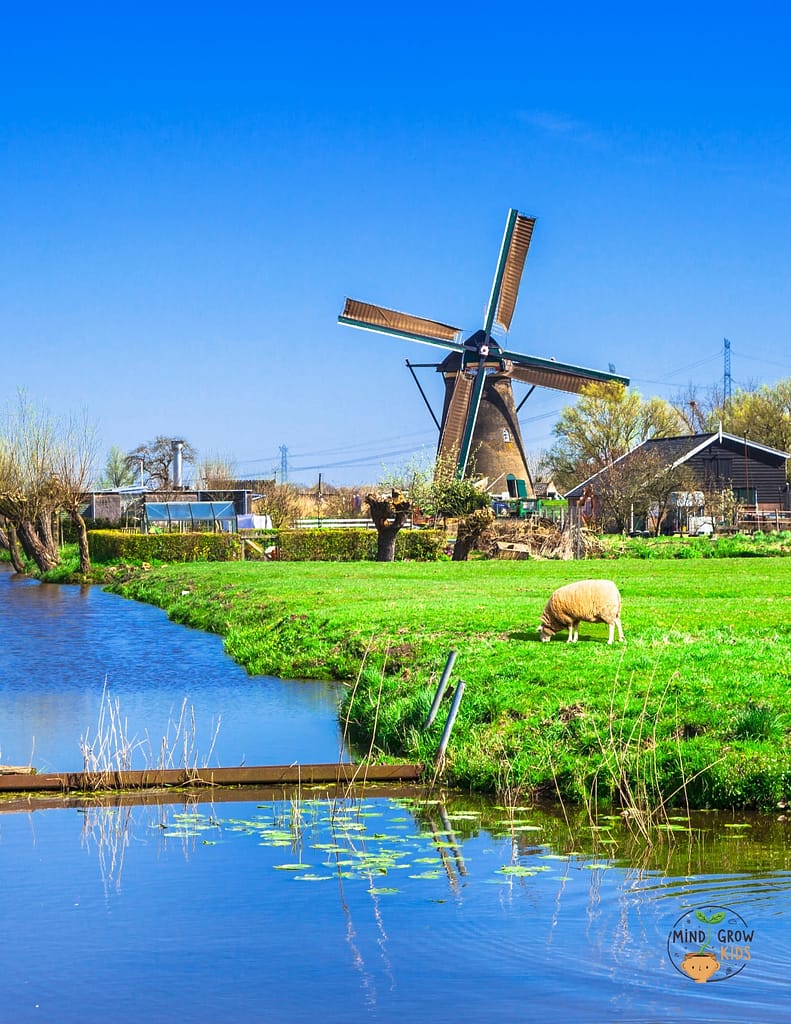
The area with the highest concentration of windmills in the Netherlands is near a village called Kinderdijk. These windmills discharge water from the Alblasserwaard region, which lies below sea level, into the Lek River. In 1997, the windmills of Kinderdijk were added to UNESCO’s World Heritage List. This means they are protected as part of humanity’s common heritage.
For centuries, the Dutch continuously pumped water from wetlands into rivers to create new settlements and protect these areas from floods. The windmills used in this process have a type of pump system called the “Archimedes screw“. The Archimedes screw, Archimedes, a scientist who lived in ancient Greece in the 3rd century BC, invented a pumping machine used to lift water from a low place to a high one. This machine consists of a tube spirally wound around a cylinder, with one end submerged in water. When the cylinder is rotated around its axis, the water begins to rise in the tube. There is also a version consisting of a spiral rotating inside a stationary cylinder. In windmills, as the mill’s arms rotate, gears rotate this cylinder, causing it to pump water.
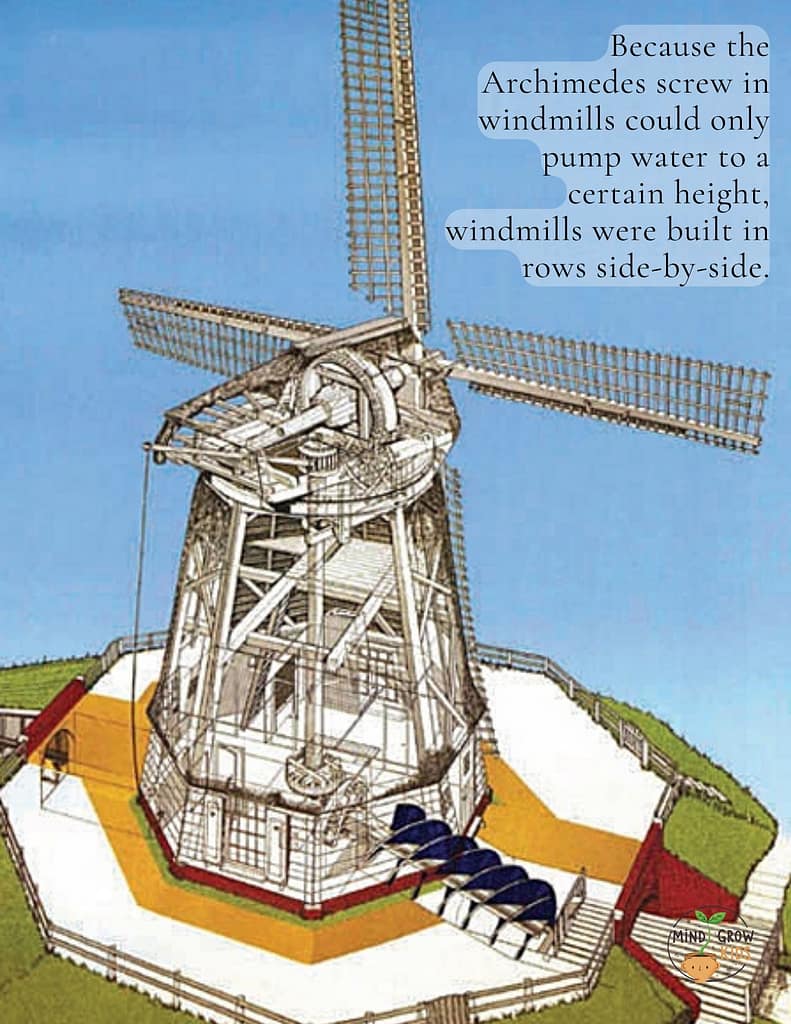
Because the Archimedes screw in windmills could only pump water to a certain height, the windmills were built in rows. Each mill pumped water from below sea level into a reservoir slightly higher than its location. The water was then gradually transferred to nearby canals and from there to streams. The number of windmills varied depending on the size of the wetland to be drained.
Sources:
www.windmillworld.com/europe/netherlands.htm
www.kinderdijk.nl/