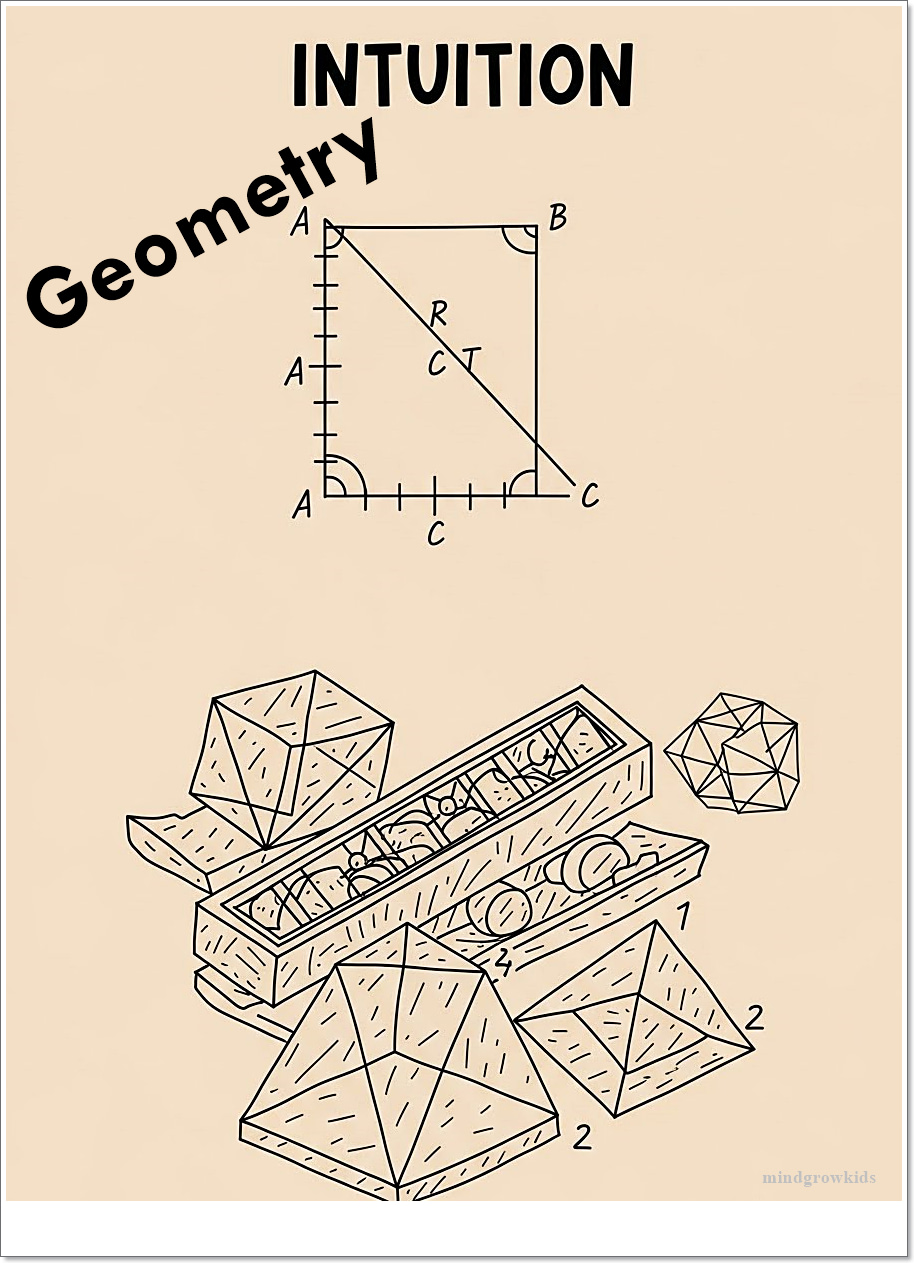
According to new research, children and adults who have never seen measuring instruments like rulers or heard of triangles, quadrilaterals, or parallelograms still possess a “geometric intuition.” Some of these individuals are from a tribe called the Mandurukú, a group in the Amazon that has no contact with the outside world. Most of the Mandurukú participants in this study are uneducated and have never used a measuring instrument, compass, or map before. Furthermore, the Mandurukú language contains very few words for subjects such as arithmetic and geometry. Scientists believe this characteristic could be very useful in understanding the human brain. Those who did the study found that people could solve some simple geometry problems without having to have basic training in geometry.

They predict they can solve the problem. To test the validity of their assumption, they enlisted the help of the Mandurukú people. Mandurukú children and adults participating in the study were asked to choose the most “weird” or “ugly” image, using Mandurukú words, from a series of six images. In each series of six images, five images represented the same geometric concept, while one did not. Even the 6-year-olds in the study were mostly able to select the different image. Similarly, the American children gave the same answers as the Mandurukú children and adults. The answers of the educated American adults were more accurate. Similarly, although the Mandurukú people and American children have skills in map reading, they are not as successful as educated adults.