Psych. Merve Başıbüyük & Sinan Canan
The Nature and Inevitability of Overthinking
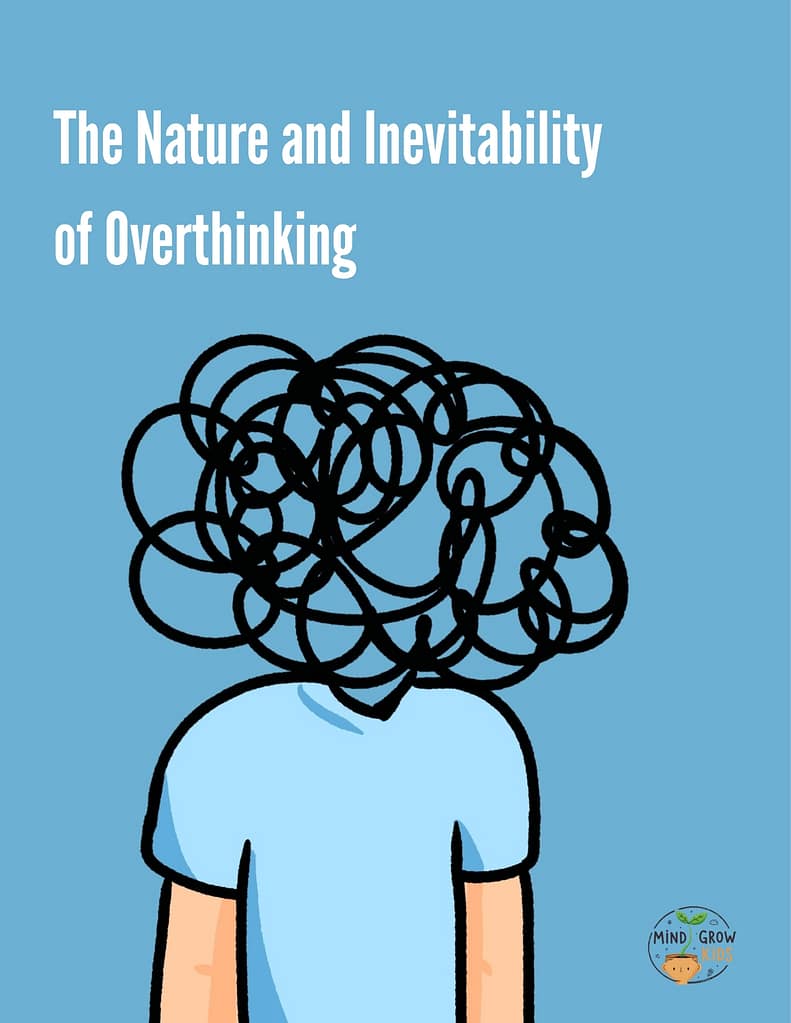
One of the most common psychological struggles today is replaying events, words, or memories in our minds over and over again—what we call “overthinking” or “taking things too personally.” But is it really possible to just “let go”? Or is that merely a pleasant-sounding but unattainable ideal? In truth, the phrase “let it go” has become somewhat hollow in everyday life; it often lacks real meaning. Everyone has their own triggers—things that might seem trivial to someone else but feel devastating to us. The key is to examine these moments of fixation and look inward. The opposite of letting go is, in a sense, “filling up”—constantly adding layers of meaning and anxiety to a subject. Understanding why we do this is the first and most crucial step toward breaking the cycle.
Biological Heritage and the Mind’s Alarm System
The tendency to overthink has roots in our evolutionary biology. The human body is wired to move unconsciously toward whatever our eyes lock onto; where the gaze goes, the body and mind follow. This mechanism is a survival instinct, especially for predators. Our brains are wired for survival and automatically focus on negative risks or potential threats. This creates what we call “risk blindness”—we become so fixated on the danger that we fail to see solutions or opportunities. Our perspective narrows, and the problem only grows.
This system was vital in ancient times when predator-prey dynamics ruled. But in modern life, it backfires in many areas—from exam stress and traffic jams to choosing an outfit or navigating workplace relationships. We are no longer on a battlefield, but our brains still react as if we are. The best approach here is to remember the principle: “Prepare for war in times of peace.” In other words, we need to prepare our minds before a crisis hits, developing inner awareness of these automatic mechanisms.
Recognizing Fixation and the Process of Acceptance
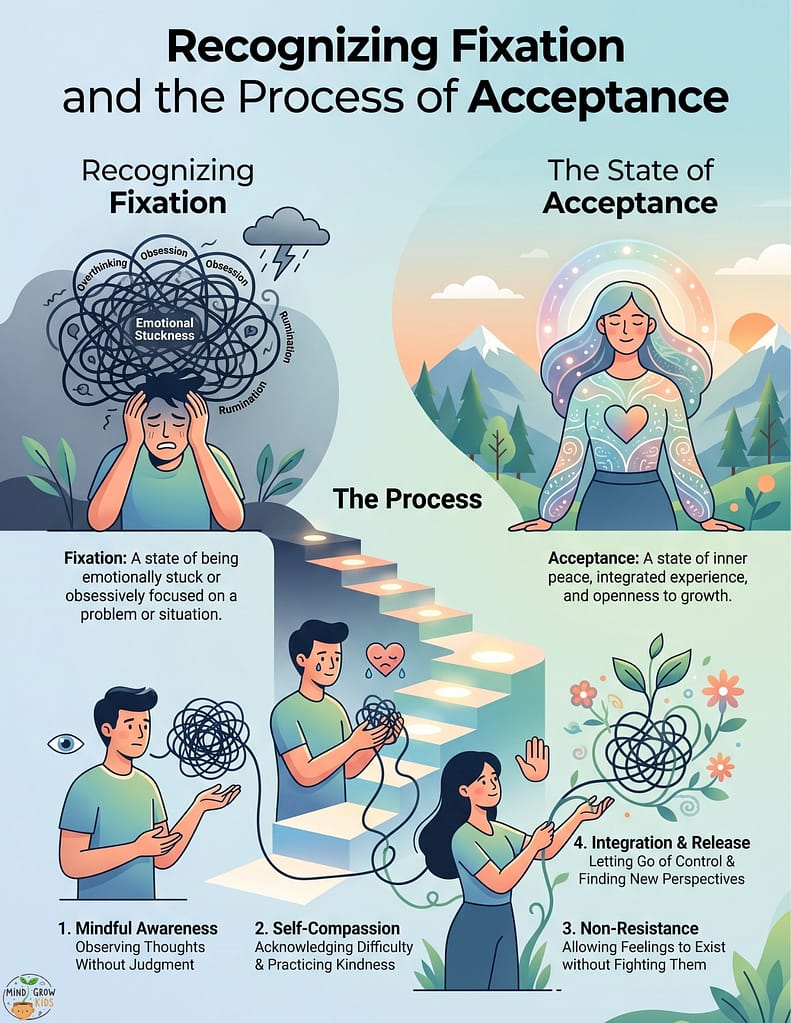
The first step toward change is recognizing that you are stuck. Once you notice it, you can say, “Yes, this is how it is,” and begin the process of acceptance. But acceptance here doesn’t mean approval or resignation; it means seeing reality as it is and asking, “What can I do with this new reality?” True change and transformation only begin when we ask that question.
Think of it like a car stuck in mud, spinning its wheels. Pressing the accelerator harder (i.e., endlessly ruminating on the event) only digs you in deeper. Trying to solve a problem by sheer thought alone is like flooring the gas in a rut. Instead, you need to take your foot off the pedal, stop, get out, and see if you can put a stone under the wheel—meaning, you need a different perspective and a new course of action. Special conditions require special responses. Mastery comes not from reacting the same way every time, but from developing flexibility and maneuverability.
Regret and Making Peace with the Past
Regret is arguably one of the most useless emotions. Dwelling on the past with “If only” thoughts mortgages both your present and your future. Yet, if we turn that same feeling of regret toward the future, it becomes incredibly useful and protective. Asking yourself, “Will I regret this tomorrow?” can prevent future mistakes. We cannot change the past, but we have full power to change the present and shape tomorrow.
The key is to slow down, pause, and assess the situation—much like driving on icy roads. Our conscious mind only kicks in when we stop. Repeating the same patterns without thinking inevitably leads to “if only” moments. Gaining a fresh perspective and transforming our behavior becomes possible in these moments of pause.
The Empty Mind and Facing Uncertainty
Many people prefer to stay constantly busy just to avoid hearing their inner voice or escaping the flood of thoughts. But the mind is like the heart—it is a vital organ that never stops working. Just as we don’t try to stop our heartbeat, we shouldn’t try to stop our mind from producing thoughts. The mind is designed to run simulations constantly in an uncertain environment, ensuring our survival. Instead of suppressing this mechanism, we need to understand and manage it.
An empty, aimless mind—one that has lost a sense of meaning—tends to produce more anxious leaps and jumps. Peaceful people are those who have a purpose, rituals, and a sense of devotion. Living a good and fulfilling life is not just about eating, drinking, or traveling. The real essence is to notice the present moment, accept it, and then create the next one. The more we live inside our heads, the more we miss out on life itself; the more we engage with life, the less we get lost in mental loops.
Comfort Zones, Learning, and Mentorship
Even when people complain about their situation, they often fear stepping out of their comfort zone because it means entering unknown territory. But no experience that keeps us comfortable, that doesn’t challenge or disturb us, can ever be truly developmental. The measure of success is being able to do something effortlessly—but to reach that point, you must first put in great effort and learn from your mistakes.
At this point, learning from those who have lived through similar experiences is invaluable. Even though we think we can learn everything from the internet, what we truly need is structured wisdom and patterned experience. Life experiences are not just data points; they are an inseparable part of who we are today. Every event—positive or negative—shapes our current self. The key is not regret, but acceptance, which is essential for becoming a whole “self.”
Conclusion: Learning Life by Living It
Life is not an equation to be solved by thinking; it is a process to be learned through experience. The mind cannot claim ownership of things we haven’t actually done, so we must put what we learn into practice. Uncertainty, mistakes, and setbacks are natural parts of life—they are not problems to be eliminated, but life itself. Alongside the negatives, uncertainty can also signal new opportunities. The important thing is to be able to pause in that uncertainty, expand our perspective, and consider how we can transform what we’re fixated on.
Let’s not forget: Fixating on our dreams and goals can be one of the strongest engines that drive us forward. As long as we are aware of what we are fixated on and can channel it toward a purpose, we can use it productively. To avoid missing out on life, we should focus on experiencing the world outside rather than getting lost in the noise inside our own heads.