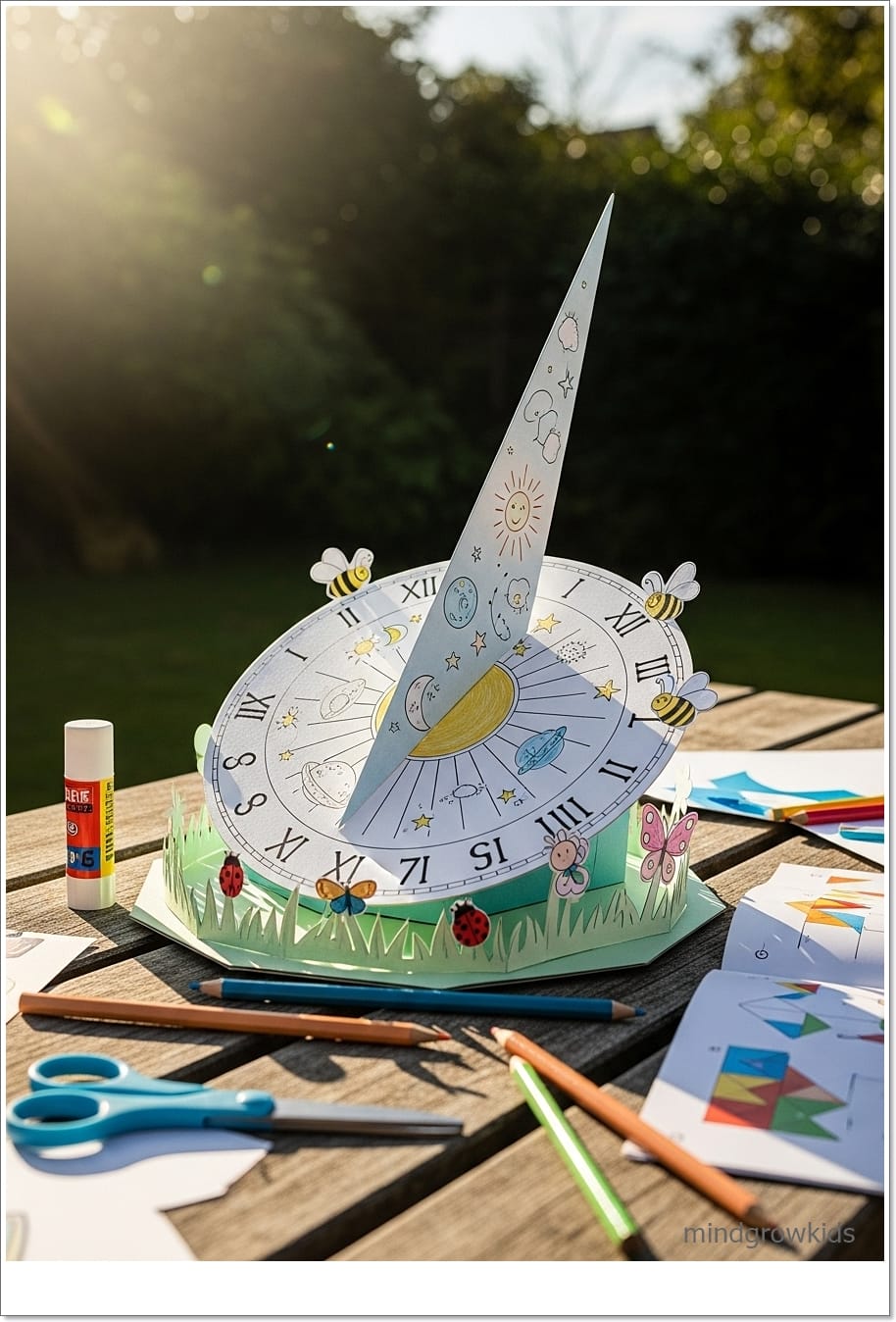
Isn’t it amazing to think that for thousands of years, people told time just by watching the sun? They built simple, clever tools called sundials. We can do the same thing today! Building your own sundial is a fun way to see how the sun moves across the sky and to become a little timekeeper yourself.
Here’s what you’ll need:
Just the sundial sheet that came with your web site.
Let’s get building! It’s super easy:
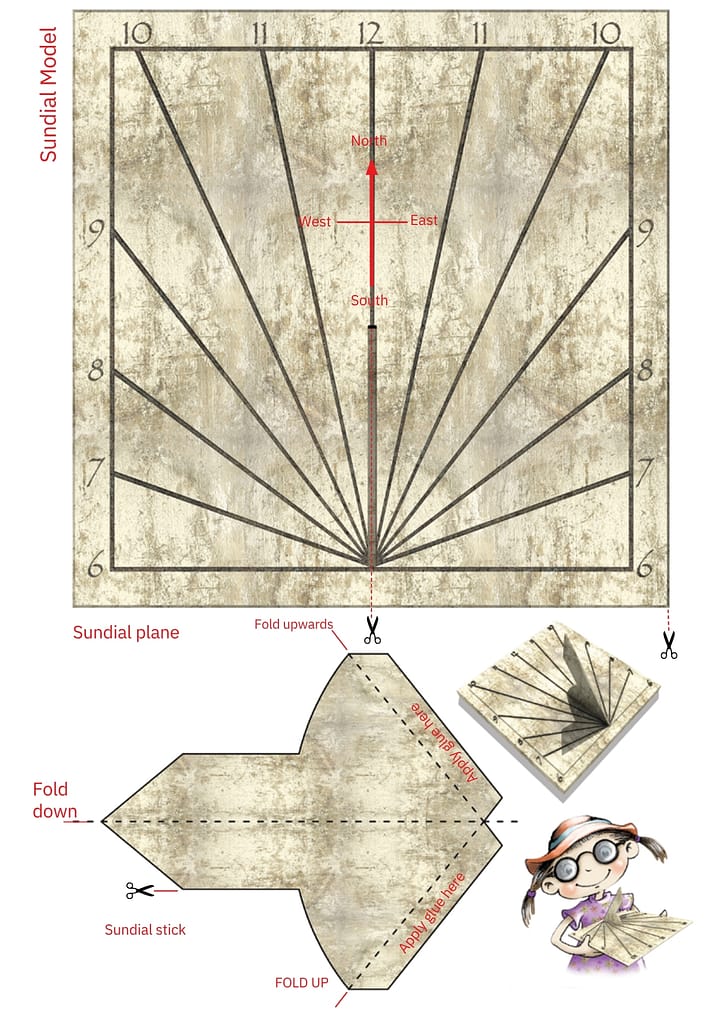
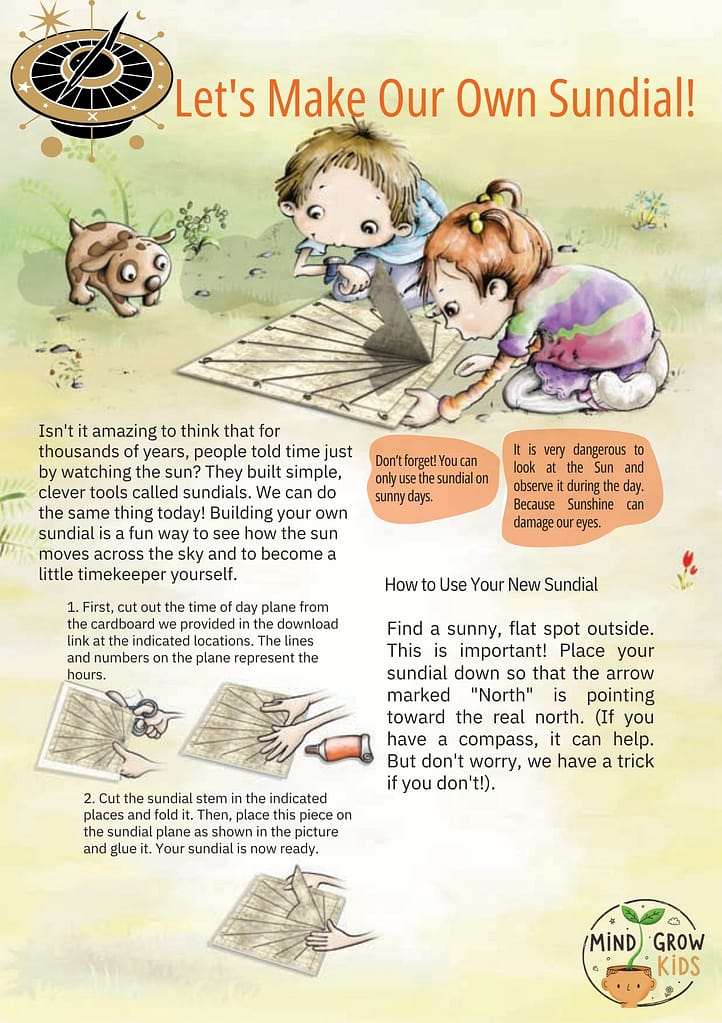
Cut out the pieces: Carefully cut out the main sundial face (that’s the base with all the numbers and lines) and the small gnomon (that’s the fancy name for the stick that casts the shadow).
Fold and stick: Fold the gnomon along the dotted line so it can stand up. Then, just glue it right onto the spot marked on the sundial base. Make sure it’s nice and straight!
You’re done! See? That was quick. Your very own sundial is ready for action.
How to Use Your New Sundial
Find a sunny, flat spot outside. This is important! Place your sundial down so that the arrow marked “North” is pointing toward the real north. (If you have a compass, it can help. But don’t worry, we have a trick if you don’t!).
Now, just look at the shadow cast by the gnomon. See which number line it falls on? That’s your sundial time!
A Few Helpful Tips for Your Adventure:
Safety First! This is the most important rule: Never, ever look directly at the sun. It’s way too bright and can hurt your eyes. Remember, we’re only interested in watching the shadow, not the sun itself.
Lost? Find North with your Sundial! If you’re not sure where north is, don’t stress. Around midday (say, between 11:00 AM and noon), take your sundial outside. If the shadow points to the “11” line, you’ve got it oriented correctly! If not, just gently turn the base until it does.
A Fair-Weather Friend: Your sundial loves sunshine! It won’t work on cloudy or rainy days. It’s a sun-powered clock, after all.
Watch the Magic of Shadows: The coolest part is watching how the shadow changes. In the morning and late afternoon, your shadow (and the sundial’s) is really long. But at noon, when the sun is high in the sky, the shadow gets super short. It’s like a silent dance happening right in front of you!
Have a wonderful time being a scientist and exploring the sun’s path