
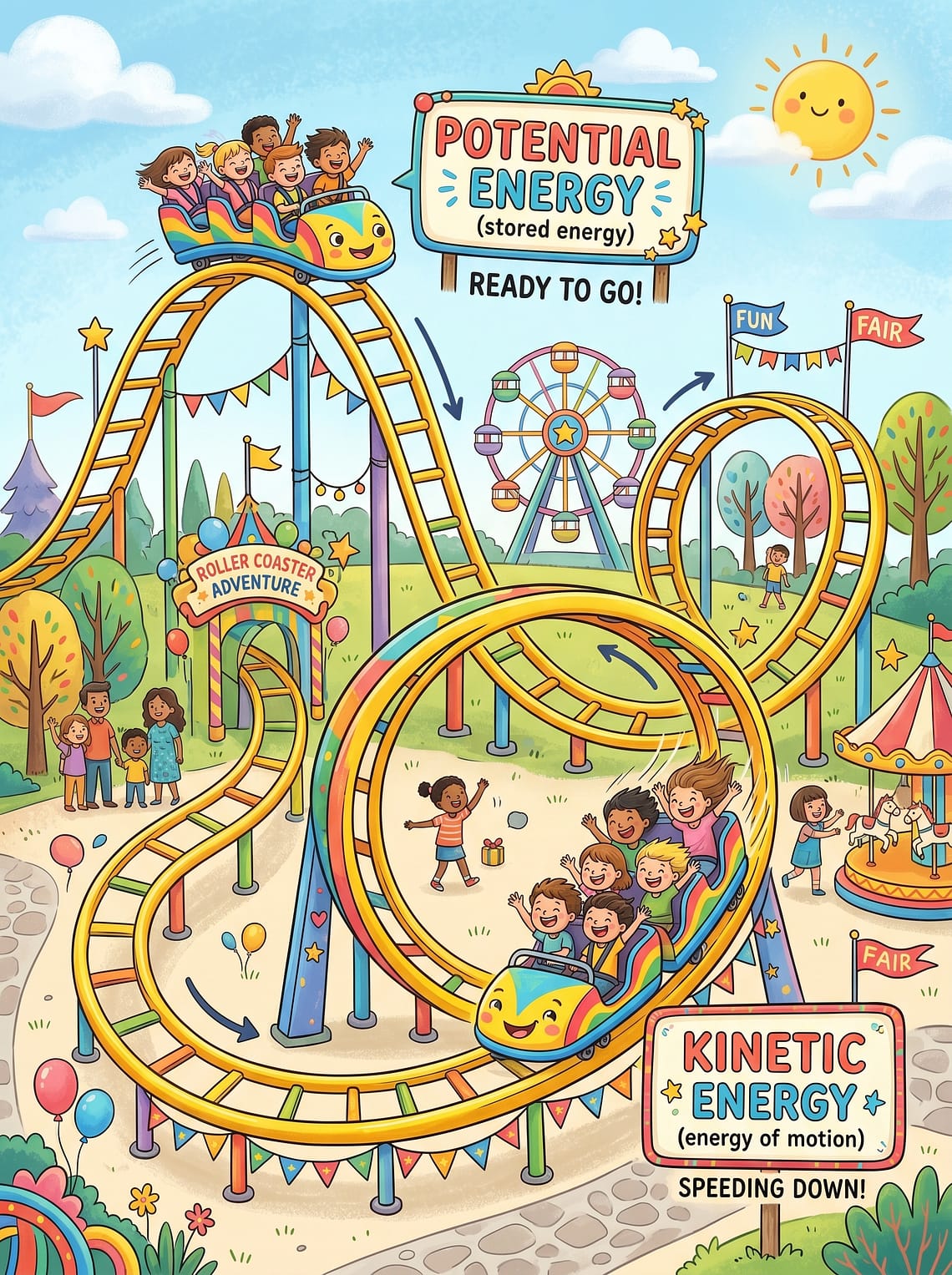
Have you ever stopped to think that every single event happening around you—and even inside you—is made possible by energy?
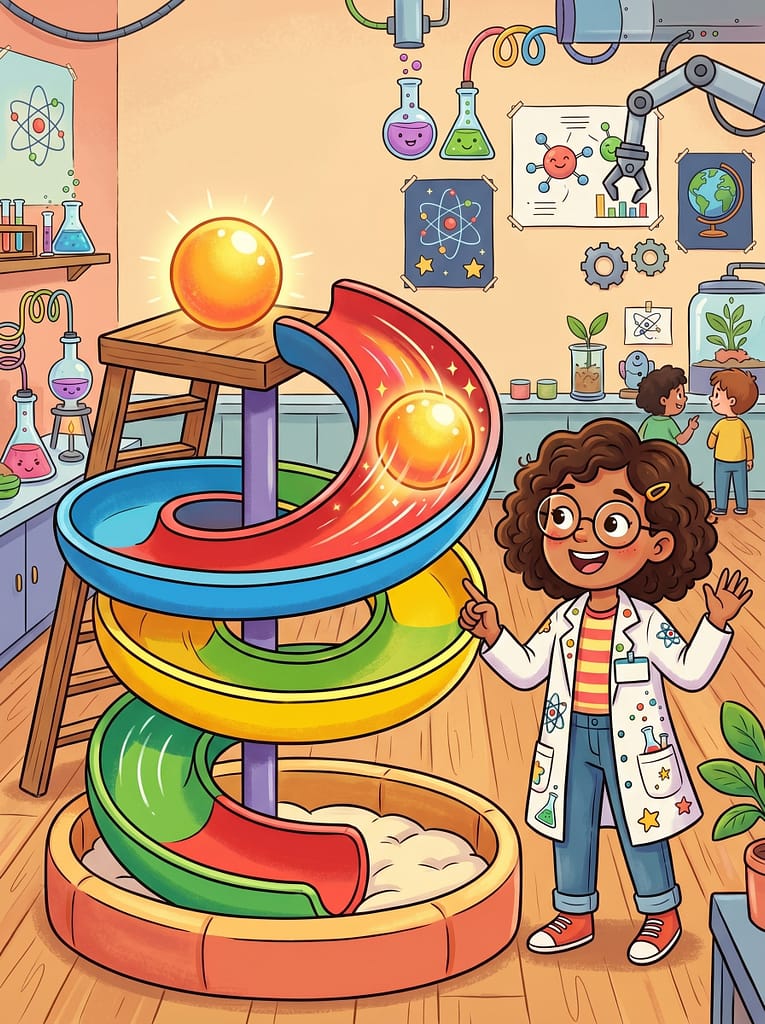
Think about it. A car speeding down the road. A ball dropping to the ground. A rock rolling down a mountainside. All of these actions, from the simplest to the most complex, happen thanks to one invisible, powerful force: energy.
Let’s take a closer look at what energy really is, how it works, and why it can never disappear.
What Is Energy, Exactly?
In the world of physics, energy is defined as the ability to do work. But to understand that, we first need to understand what “work” means in a scientific way.
In physics, work happens when a force moves an object from one place to another. During this movement, energy is exchanged. So, whenever you see something moving or changing, you can be sure that energy is involved.
The Golden Rule of Energy: It Never Disappears
Here’s a fascinating fact: Energy cannot be created or destroyed. It only changes from one form to another. This is called the Law of Conservation of Energy, and it’s one of the most important rules in science.
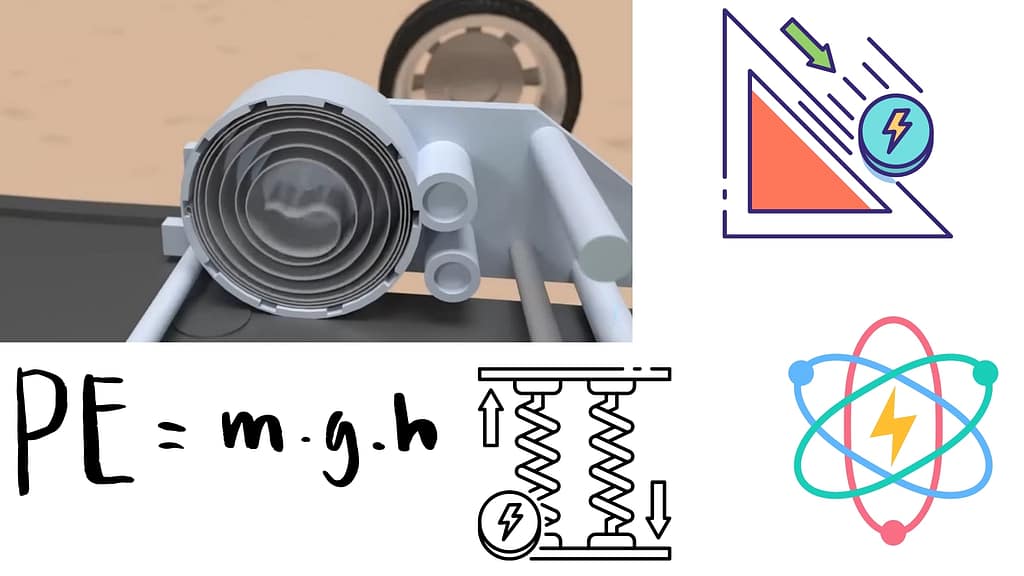
Let’s look at a fun, everyday example that many kids will recognize: a wind-up toy car.
When you wind up the car, you are storing energy inside its spring. Then, when you let the car go, that stored energy is released, and the car zooms forward. The energy didn’t vanish or magically appear. It simply transformed from stored energy (in the spring) into moving energy (the car’s motion).
Two Main Types of Energy to Remember
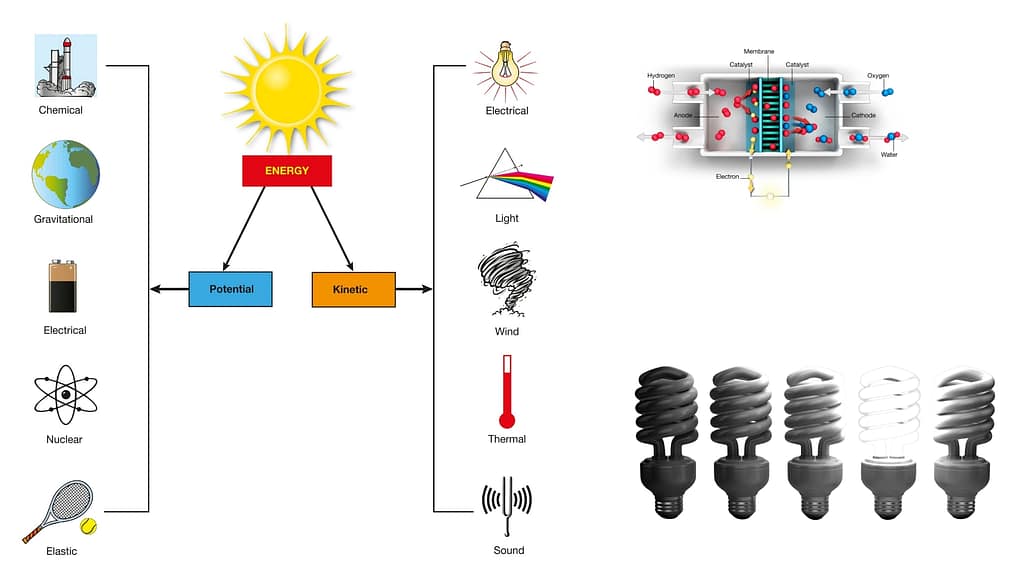
Energy can take many forms. In this article, we’ll focus on two very important ones that are easy to see in daily life: Potential Energy and Kinetic Energy.
1. Potential Energy (Stored Energy)
Potential energy is stored energy that an object has because of its position or condition. It’s like a battery waiting to be used.
- Example 1: Holding a ball. Imagine you are holding a ball high up in the air. Because of its height, it has potential energy. As soon as you release it, gravity pulls it down, and that stored energy begins to change.
- Example 2: A stretched rubber band or spring. When you pull back a rubber band or compress a spring, you are storing potential energy in it. When you let go, that stored energy is released as motion.
2. Kinetic Energy (Moving Energy)
Kinetic energy is the energy of motion. Any object that is moving has kinetic energy.
- Example 1: Riding a bike downhill. Imagine pedaling up a hill (storing potential energy) and then zooming down the other side. As you go faster and faster, you are gaining kinetic energy.
- Example 2: A child on a swing. When a child swings back and forth, their speed changes. At the highest points, they slow down (less kinetic energy). At the lowest point, they are fastest (maximum kinetic energy).
How much kinetic energy does something have? It depends on two things: the object’s mass (how heavy it is) and its speed (how fast it’s moving).
For example, imagine a bowling ball and a tennis ball moving at the same speed. The bowling ball has much more kinetic energy because it has a larger mass.
The Amazing Transformation: Potential ↔ Kinetic
Now for the really cool part. Remember the Law of Conservation of Energy? This is where it comes to life. Potential and kinetic energy are constantly transforming into one another.
- Dropping a ball: When you hold a ball up high, it has lots of potential energy. As soon as you let go and it starts to fall, that potential energy transforms into kinetic energy. By the time the ball hits the ground, almost all of the potential energy has become kinetic energy.
- Climbing a hill on a bike: As you pedal up a hill, you are using your kinetic energy (your motion) and turning it back into potential energy (stored by your new height). When you ride down the other side, that potential energy turns back into kinetic energy, and you speed up again.
In both cases, no energy is lost. It only changes form. The total amount of energy stays the same.
Conclusion: A World in Motion
Energy is the hidden hero of our universe. It powers our cars, our toys, our sports, and even our own bodies. By understanding potential and kinetic energy, and by remembering that energy is always conserved—never created or destroyed—we can see the world in a whole new way.
So the next time you drop a ball, ride a bike, or stretch a rubber band, remember: you aren’t creating or destroying energy. You are simply participating in one of the universe’s most amazing, invisible dances.